Last-Minute Business Travel: 8 Hacks to Get Organized Fast

Your phone lights up at 4:30pm on a Tuesday. It’s your manager, or your biggest client, or the deal that’s been on the edge for three months.
“Can you be in [city] tomorrow morning?”
This is not a question. It’s a test of your systems.
The business travelers who handle this without breaking a sweat aren’t calmer than you or less busy than you. They’ve just built the infrastructure to handle emergency trips before they happen. When the call comes, they’re not starting from scratch — they’re executing a playbook.
Here are the 8 hacks that make last-minute business travel feel manageable instead of catastrophic.
Hack #1: Keep a Pre-Packed Go Bag at All Times
This is the foundational habit. Everything else builds on it.
A go bag is a toiletry kit and travel supply kit that never gets unpacked between trips. The moment you return from a trip, you restock it — not when the next trip is announced. You’re always 20 minutes away from departure-ready.
What goes in the go bag (permanently):
Toothbrush and toothpaste (travel size)
Deodorant (travel size)
Face wash or cleansing wipes
Moisturizer (3.4oz or under)
Razor and shaving cream (or a compact electric razor)
Comb or travel brush
3 days of any prescription medication, restocked after every trip
Over-the-counter essentials: ibuprofen, antacid, antihistamine
Phone charger (a dedicated travel charger, not the one at your desk)
USB-C cable
Portable power bank (charged)
Compression socks (1 pair)
Eye mask and earplugs
$100 cash
The go bag doesn’t mean you pack these items — it means they’re already packed. Always.
The time savings on a last-minute trip: approximately 40 minutes of assembly and a full elimination of the “did I forget anything?” anxiety.
Hack #2: Book Same-Day Flights Without Overpaying
Last-minute flights are expensive. Same-day flights on major carriers can run 2–3x the standard fare. But there’s a way to work the system.
The same-day booking strategy:
First, check directly with the airline before using a third-party aggregator. American, Delta, and United all have same-day confirmed and same-day standby options for elite status members that cost far less than booking a new ticket. If your company has a preferred carrier agreement, call the corporate line — not the consumer line.
For everyone else:
Google Flights is your first stop. Set the departure date to today or tomorrow and check the full week view — sometimes a departure 6 hours later saves $200 and still gets you there in time.
Hopper predicts fare movements and will tell you if the price is likely to rise in the next 24 hours. Useful context for deciding whether to book now.
Skiplagged surfaces “hidden city” fares — routes where your destination is a layover on a cheaper itinerary. Use carefully and only with carry-on luggage (checked bags will continue to the final destination).
For travel managers handling last-minute bookings: most TMC platforms have emergency booking queues with dedicated agents. If your company uses TripActions/Navan, Concur Travel, or similar — use the emergency booking line, not the standard portal. Response time on emergency queues is typically under 10 minutes vs. the standard 2-hour window.
Hack #3: Book Your Hotel in the Next 10 Minutes
Same-day hotel availability is better than most travelers expect, particularly in major business markets like NYC, Chicago, and LA. Hotels would rather fill a room at 60% of rack rate than leave it empty.
The same-day hotel booking tools:
HotelTonight (now part of Airbnb): built specifically for same-day and next-day bookings. Rates are often 20–40% below standard. The app shows availability, photos, and cancellation policy in a single view. Best for last-minute deals in US cities.
Direct hotel booking: calling a hotel’s front desk directly — not the reservation line, not the website — and asking about same-day rates is still one of the best-kept hacks in business travel. Hotels have discretion to reduce rates that aren’t published online. This works particularly well for independent and boutique hotels.
Hopper and Priceline Express Deals: both offer opaque booking options (you don’t know the hotel name until you book) at significant discounts. If you’re flexible about which major chain you’re staying at and you know the neighborhood, these can be 30–50% cheaper than standard rates.
The non-negotiable check: confirm the hotel has same-day check-in availability before your arrival time. Not all same-day bookings guarantee early check-in. If you’re landing at 9am for a noon meeting, confirm this explicitly.
Hack #4: Build a Digital Document Vault Before You Ever Need It
The last-minute trip where you need your passport and can’t find it is the single most common source of genuine travel emergencies. This problem is entirely preventable.
Build your digital document vault today:
Photograph your passport data page, your driver’s license (front and back), your health insurance card, your travel insurance card, and any frequently used visa pages.
Save all photos in a clearly labeled folder in iCloud Photos, Google Photos, or a secure cloud storage app like 1Password (which also handles document storage).
Email yourself a single email with all document photos attached and subject-line “TRAVEL DOCS — [Your Name]” so it’s searchable instantly.
If your company uses Concur, TripActions, or a similar TMC, many platforms have document storage built in — use it.
What this solves on a last-minute trip:
You’re packing fast and you can’t remember if your passport is up to date. You check your phone in under 30 seconds. Your passport expires in 4 months — you catch it before you’re at the airport.
You land at your hotel and realize you left your insurance card at home. You pull it up on your phone. Problem solved.
The digital vault doesn’t replace physical documents. It’s the backup that turns a catastrophic situation into a 30-second phone check.
Hack #5: Have Ground Transportation on Speed Dial
This is the hack that experienced road warriors rank highest, and the one first-time emergency travelers overlook most.
On a last-minute trip, your bandwidth is limited. You’re booking flights, rescheduling meetings, communicating with your team, and trying to remember where your dress shoes are. The last thing you need is to spend 15 minutes at 6am figuring out how to get to JFK.
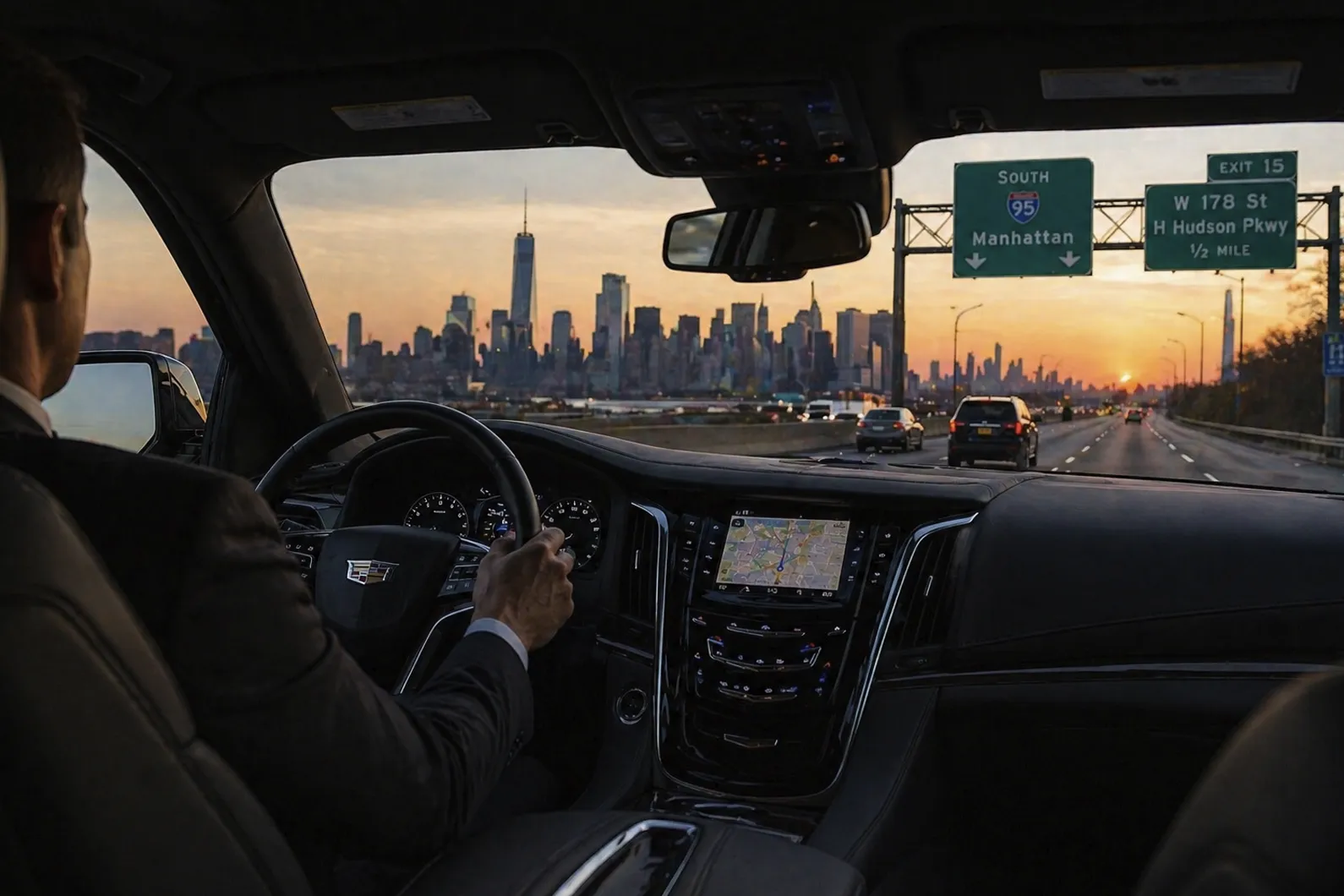
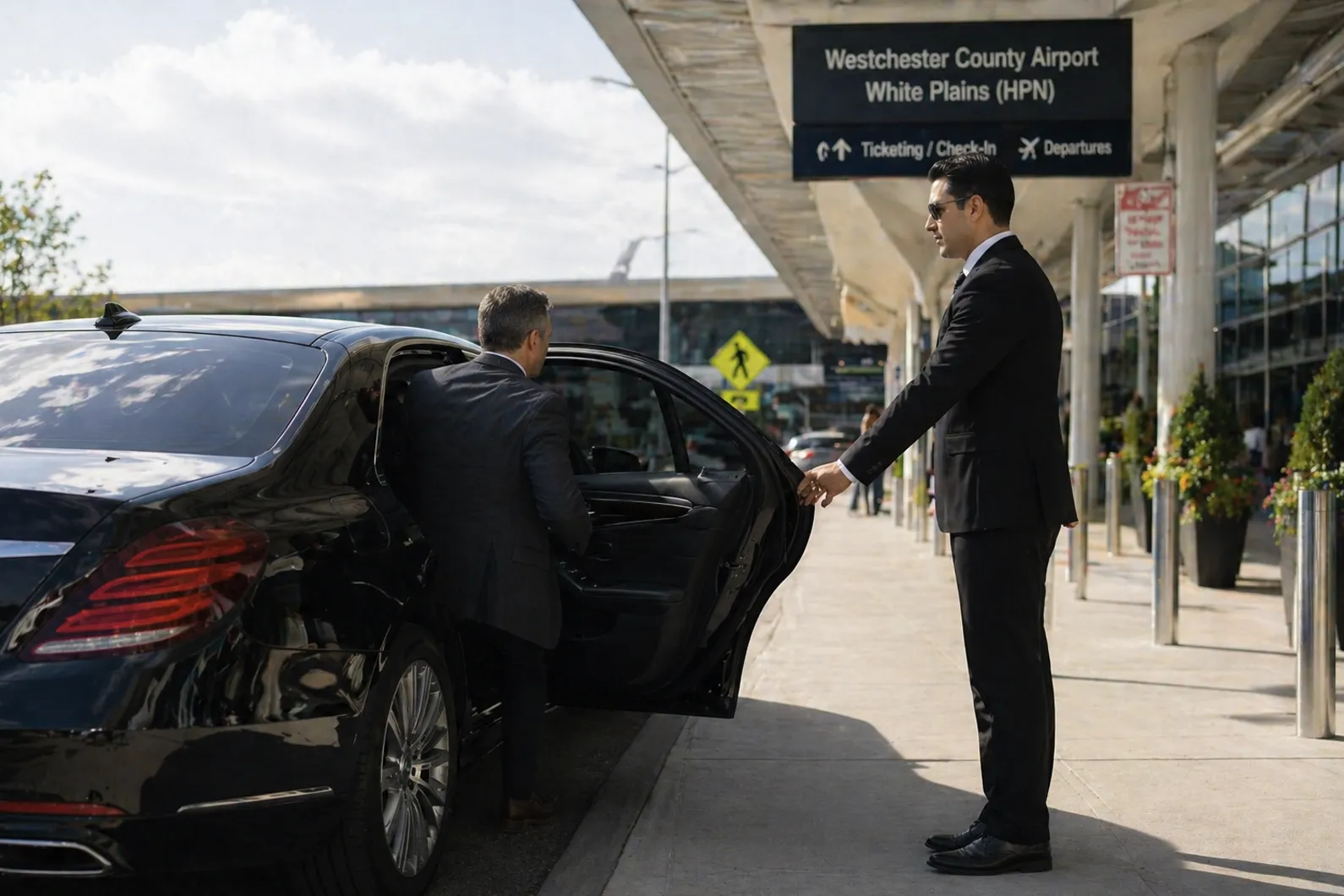
Pre-saving a trusted car service in your contacts — with an account already set up — means your airport transfer takes under 2 minutes to arrange even on same-day notice.
CoreCar books in under 2 minutes by phone or online, handles same-day reservations, and covers all three major NYC-area airports: JFK, LGA, and EWR. Your driver tracks your flight for arrivals, adjusts for delays, and meets you at the terminal. No surge pricing. No “finding a driver.” No managing it when you’re already at capacity.
For travel managers setting up corporate accounts: CoreCar’s centralized billing and trip reporting means your last-minute booking doesn’t create an expense reconciliation headache on top of everything else.
What to set up before you ever need it: a CoreCar account with your preferred pickup address, corporate billing attached, and the phone number saved in your phone as “Car Service — CoreCar.” When the emergency trip call comes, ground transportation is one thing you handle in 90 seconds.
Hack #6: Build a Capsule Travel Wardrobe That’s Always Ready
The fastest packing system is one where every item you own for travel already works together and already lives in one place.
A capsule travel wardrobe has five characteristics:
Every item works with every other item
Colors are neutral (navy, grey, white, black)
Fabrics are wrinkle-resistant or wrinkle-forgiving
Nothing requires dry cleaning or special care
It lives in (or adjacent to) your go bag
The 4-day last-minute capsule (the minimum viable business wardrobe):
2 dress shirts (wrinkle-resistant, white and light blue)
1 blazer (navy or charcoal — works formal or business casual)
2 pairs of trousers (grey and navy — wear one on the plane)
1 pair of dark jeans (for travel day or casual evening)
2 pairs of dress shoes (black and brown — wear the black, pack the brown... or just pack one)
3 changes of underwear and socks
1 belt
This wardrobe covers: 2 days of formal client meetings, 1 business casual day, 1 travel day. For a last-minute trip where you don’t know exactly what the schedule looks like, it handles everything.
The packing time with this system: 12 minutes. Not because you’re fast — because there are no decisions to make.
Hack #7: Use Communication Templates for Last-Minute Trips
When a last-minute trip is confirmed, you need to simultaneously: notify your team, reschedule any conflicting meetings, brief anyone who needs to cover your responsibilities, and let relevant clients know you’ll be traveling.
Doing all of that in real time while also booking flights and packing is how important communications get missed.
Build a template library for your three common scenarios:
Template 1: Team notification (emergency trip)
“Heads up — traveling to [city] tomorrow through [date] for [general reason]. I’ll be available on Slack/email during standard hours with possible delays during transit windows [time-time]. [Name] will cover [responsibility] while I’m out. Back online fully by [date/time].”
Template 2: Client/external contact notification
“Quick note — I’ll be traveling to [city] on [date] for a business commitment. My availability may be limited between [time] and [time]. I’ll have email access throughout and will respond within [timeframe]. If you have anything urgent, [phone/name] is the best way to reach me.”
Template 3: Meeting rescheduling
“I need to reschedule our [meeting type] originally set for [date/time] — I’ll be traveling unexpectedly on that day. I have availability [list 3 options]. Please let me know which works and I’ll send an updated invite immediately.”
Tools: Text Blaze (Chrome extension) or TextExpander lets you store these templates and expand them with a keyboard shortcut. Your template becomes a full email in 3 keystrokes. The time savings per last-minute trip: 20–30 minutes. Per year, if you’re a frequent traveler: hours.
Hack #8: Build a Recovery Protocol for When You Return
Last-minute trips are disruptive in both directions. You leave in a scramble and you return to a backlog.
The recovery protocol is the set of actions you take in the first 90 minutes after returning that prevent the trip from creating a week-long productivity deficit.
The return protocol:
Restock the go bag immediately (within 2 hours of getting home, before you forget). Replace the toiletries you used, return the charger, restock any medications you took. The bag should be trip-ready by the time you go to sleep.
Process your expense receipts (on the ride home, if you pre-booked a car). Photograph everything in Expensify or Concur. By the time you’re back at your desk, the report is 90% complete.
Send the trip debrief (within 24 hours). A 3-bullet summary to your manager or the relevant stakeholders: what was accomplished, what follow-up is needed, what the next step is. This closes the communication loop that the abrupt departure opened.
Reschedule what you displaced (day 1 back). Any meetings or commitments you postponed for the trip should be rescheduled in the first hour of your first full day back. They won’t reschedule themselves, and each day you delay makes the backlog more demoralizing.
Sleep (that night, not at your desk). Last-minute trips compress your physical and cognitive reserves. A hard cutoff at a reasonable time the evening you return — not “just catching up on email” until midnight — is how you arrive at your desk the next morning functioning, rather than running on fumes through the rest of the week.
The Last-Minute Trip Is a Systems Test
The reason some people handle emergency trips smoothly and others spiral is not composure or experience — it’s infrastructure. The go bag, the digital document vault, the communication templates, the pre-saved car service account. None of these take more than an afternoon to set up. All of them pay dividends on every trip you take after.
The next time your phone lights up at 4:30pm on a Tuesday, you want your response to be: “When do I need to be there?”
Not: “Wait, where’s my passport?”
Build the systems now. The last-minute call is coming.
CoreCar provides premium corporate car service throughout the NYC/NJ/CT tri-state area, with same-day availability for JFK, LGA, and EWR airport transfers. Set up your corporate account at corecar.com.
Last updated: March 2026.