Bleisure Travel - The Complete Guide to Mixing Business and Leisure in 2026

You have a Wednesday morning flight to New York. The client meeting runs Thursday. Your return flight is Friday at 6 a.m.
Or it could be Sunday evening.
The cost difference for that flight change: often zero, or close to it. The difference in your week: arriving home at the end of a long trip feeling like you ran a gauntlet, or arriving home after a weekend in one of the world’s great cities with actual memories.
That choice—to stay, explore, and turn a business trip into something more—is called bleisure travel. It has become one of the most significant behavioral shifts in corporate travel over the past five years, and in 2026, it is neither unusual nor controversial. It is simply how a growing number of business travelers choose to operate.
This guide covers everything: what bleisure travel is, why it has grown so fast, how to plan it properly, what your employer actually cares about, and specifically what to do if your next business destination is New York City.
What Is Bleisure Travel?
Bleisure travel is the practice of extending a business trip to include personal leisure time—before, during, or after the professional portion of the trip.
The word is a portmanteau of “business” and “leisure,” and while the term itself has been around since roughly 2009, the behavior it describes has accelerated dramatically since 2020, as remote and hybrid work reshuffled people’s relationships with travel, time, and the hard line between work and personal life.
In its simplest form, bleisure looks like this: You’re sent to Chicago for a two-day conference. Instead of flying home Thursday night, you stay through the weekend, catch a Cubs game, eat at the restaurant your colleague recommended, and spend Saturday morning walking the lakefront. You fly home Sunday evening. Your employer paid for the work-related flights and hotel nights. You covered the weekend hotel and your personal expenses.
That’s the archetypal bleisure scenario. But it expands in both directions. Some travelers arrive a day early to explore before meetings begin. Some integrate personal time throughout a work trip—a dinner reservation, a half-day at a museum on a free afternoon. Some specifically request that business travel be routed through cities they want to visit.
The common thread: business travel provides the logistical foundation—the flight, the schedule anchor, the reason to be in a particular city—and the traveler builds something personal around it.
Bleisure Travel Statistics in 2026
The data on bleisure travel has matured considerably since the early tracking began around 2015. Here is what we know as of 2026.
According to the Global Business Travel Association (GBTA), approximately 60% of business travelers report having extended at least one trip for leisure in the past 12 months—up from roughly 43% in 2019. The pandemic-era reassessment of work-life priorities accelerated a trend that was already underway.
Millennial and Gen Z travelers are the most active bleisure practitioners: 72% of millennial business travelers report regularly incorporating leisure into work trips, compared to 48% of Gen X and 31% of Baby Boomers. As these younger demographics move into VP and Director-level roles—the positions that come with the most business travel—bleisure behavior is increasingly shaping how corporate travel programs are designed.
The average bleisure extension is 2.4 days. Most travelers add a weekend rather than weekdays, which minimizes the professional schedule impact and maximizes the usable leisure time.
Destination matters. Cities with strong cultural offerings, restaurant scenes, and outdoor access see the highest bleisure rates. New York is consistently at or near the top of the list globally.
On the employer side, 78% of companies in a 2025 Deloitte workforce survey reported having updated their travel policies to formally acknowledge or support bleisure extensions. Of those, the majority cited employee satisfaction and retention as primary motivators.
Benefits for Employees
The personal case for bleisure travel is intuitive, but it’s worth articulating clearly—because the practical objection most travelers raise is that it feels indulgent, or that they’ll be judged for staying.
Work-life integration, not balance. The traditional model of “leave work, have a life” has given way to something more fluid for most knowledge workers in 2026. Bleisure travel is one expression of this: professional obligations and personal enrichment don’t have to be in separate boxes. A business trip to New York that also includes a museum, a dinner at a restaurant you’ve always wanted to try, and a Saturday morning run through Central Park is not a compromise. It’s a full experience.
Mental health and burnout prevention. Frequent business travel is correlated with burnout, relationship strain, and chronic fatigue. The compensation mechanism—the reason many people continue doing it—is that travel itself can be energizing when it includes genuine exploration. Travelers who incorporate leisure into work trips report significantly higher travel satisfaction scores than those who do not, even when the professional portions of their trips are identical.
Exploring cities you’d never visit otherwise. Business travel routes people through destinations they would not necessarily choose for a personal vacation. These are often interesting cities—Charlotte, Cleveland, Minneapolis, Denver—that reward a weekend of exploration. The chance to spend 48 hours as a temporary local is available at near-zero marginal cost.
No extra flight cost. This is the practical anchor of the whole proposition. The flight is already paid for. The cost of extending is a hotel night or two—often at negotiated corporate rates or easily offset points—and your personal expenses. The biggest cost item in any trip is already covered.
Benefits for Employers
Smart organizations understand that bleisure is not a perk to be reluctantly tolerated—it is a retention and satisfaction tool that costs almost nothing.
Employee satisfaction scores are measurably higher among travelers who bleisure. When people feel that business travel enhances rather than depletes their lives, they are more willing to travel, less likely to decline travel-intensive roles, and more engaged overall.
Retention impact at the margin. The decision to leave a company rarely hinges on a single factor, but the accumulated quality-of-life impact of frequent travel is a real variable in retention calculations for high performers with mobility. Organizations that support bleisure send a signal that they see their employees as whole people.
No meaningful incremental cost. Bleisure extensions, properly structured, cost the employer nothing. The flight is paid. The employee covers their own weekend hotel and personal expenses. The company’s policy cost is administrative—and most of that is handled by a simple policy update.
Better rested, more present travelers. A VP who spent Saturday exploring a city and slept in on Sunday morning often performs differently in Monday morning meetings than one who spent the weekend in transit. This is anecdotal but widely reported.
How to Plan a Bleisure Trip
Planning a bleisure extension is simpler than most people think. The main decisions are structural.
Extend before or after?
Extending after is more common and generally easier. Your professional schedule is complete, your deliverables are done, and you can transition fully into leisure mode without the anxiety of incomplete work obligations. The psychological shift is cleaner.
Extending before can work well for cities where you want to arrive with energy—New York, San Francisco, London—before a demanding schedule begins. The risk is that a logistical problem during leisure time (illness, flight delay) creates professional consequences.
How many days?
The sweet spot for most travelers is one to three days. Two days—a Saturday and Sunday—integrates neatly at the end of a Thursday or Friday business close without creating Monday morning travel stress. One day is better than nothing. Three or four days starts to feel like a real vacation and warrants more intentional planning.
The cost separation principle.
Clear delineation between business expenses and personal expenses is both an ethical obligation and a practical protection. Your employer pays for business nights and business-related transportation. You pay for leisure nights and personal activities. Keep receipts separated. Bill accordingly. This is not complicated—it just requires intentionality.
Booking your extension.
Most corporate travel portals allow travelers to modify return flights directly. Alternatively, book the extension segment personally so there is no confusion about who paid for what. Notify your executive assistant or travel manager when extending so they can update your itinerary and contact information.
Tell someone. Duty of care obligations mean your employer should know where you are during a work trip, including extensions. A quick email to your EA or travel manager with the updated return date is good practice and good professional hygiene.
Bleisure in New York City
New York is one of the world’s great bleisure destinations—not because it’s the most relaxing (it isn’t) but because it is genuinely inexhaustible. There is no version of “I ran out of things to do in New York over a long weekend.”
For the business traveler whose meetings are in Midtown or the Financial District, here is a practical framework for building a compelling 48-hour leisure extension.
Food and drink. New York’s restaurant scene is one of the few things that lives up to its reputation. For a Saturday dinner that feels genuinely special without requiring a six-month reservation: the West Village and Greenwich Village have a concentration of excellent independent restaurants at every price point. The East Village has depth in Japanese and Korean cuisine. If you have a client relationship to maintain or a celebration to work in, the bar program at any number of classic hotel bars—the King Cole at the St. Regis, the Campbell in Grand Central—offers a setting that is distinctly New York.
Culture. The Metropolitan Museum of Art on a Friday evening, when crowds thin and the light through the Great Hall is something else. MoMA on a weekday. The Frick Collection, recently reopened after a major renovation, is among the finest small museums in the world. The New-York Historical Society is consistently underrated.
Theater. If your extension includes a Saturday and you’re not otherwise committed, Broadway is the obvious choice—but off-Broadway is often more interesting and always easier to get into. Check TodayTix for same-week availability; last-minute tickets at significant discounts are the norm if you’re flexible.
Neighborhoods worth a morning. The High Line for the architecture and the views, starting at Hudson Yards and walking south. Brooklyn Bridge Park for a different angle on the skyline. The Meatpacking District to Carroll Gardens on a Saturday morning is a walk through the range of the city. Williamsburg for coffee, record shops, and a look at what the outer boroughs have become.
Central Park. This deserves its own note because people from outside the city consistently underestimate it. Not a park in the traditional sense—a 843-acre designed landscape with its own internal geography. A morning run from the Reservoir loop down through the Ramble and out to Bethesda Fountain is one of the better free experiences the city offers.
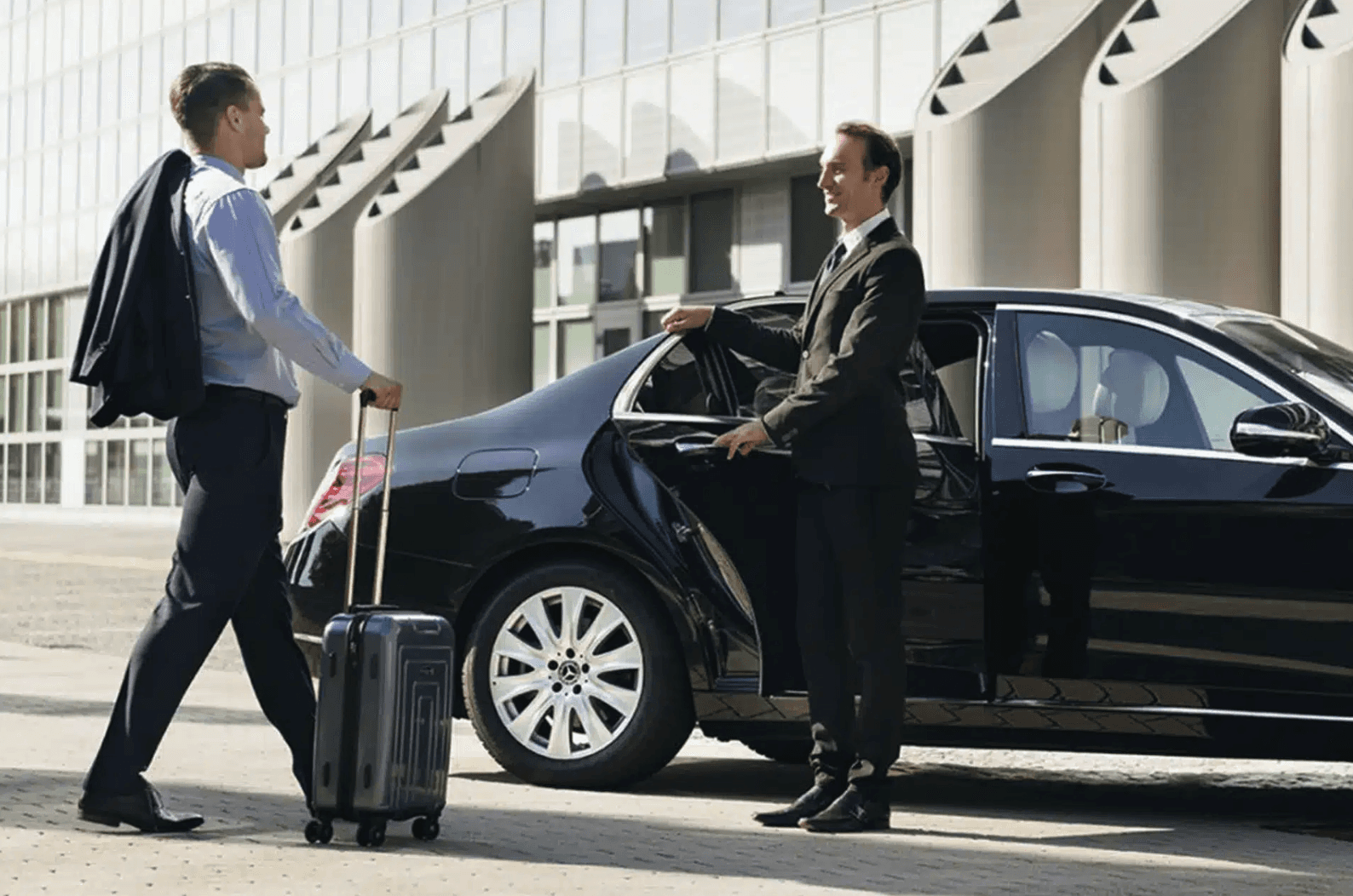
Getting around. The subway is functional and fast. It is also not the way to experience the city if you want to actually see it. For point-to-point efficiency during a bleisure extension—from a Midtown hotel to a dinner reservation in the West Village, or from TriBeCa to a Brooklyn venue—a private car keeps the experience seamless. For more exploratory use, an hourly car service lets you move through the city at your own pace without the logistics of hailing rides at each stop.
Company Policies and Bleisure: What to Actually Check
Most modern travel policies have something to say about bleisure extensions, and most of what they say is permissive. Here is what to look for.
Flight change fees. Many corporate travel programs book on flexible fares. If yours does, changing your return date costs nothing or very little. If your policy uses basic economy or restricted fares, the change fee may come out of your pocket—which is usually still a reasonable trade-off.
Hotel expense separation. If you extended into the weekend, confirm with your EA or travel manager that only the business nights are on the corporate account. This is usually a two-minute conversation and a simple adjustment.
Duty of care registration. Some organizations require that any travel booked outside the corporate portal—including personal extension nights—be registered in the travel system for emergency contact purposes. Know your company’s requirement.
Medical and travel insurance during extension. This is the question most travelers don’t ask until they need the answer. Some corporate travel insurance policies cover the entire duration of an international trip, including leisure extensions. Others cover only the business portion. For domestic travel the stakes are lower, but for international bleisure, confirm your coverage before you go.
Tax treatment. In the United States, the IRS considers business travel expense deductions to apply only to the business portion of a mixed trip. The personal days are personal expenses. This applies to self-employed travelers and any situation where you are personally deducting business travel. For salaried employees, this is largely your employer’s concern, but it reinforces the importance of clean expense separation.
How CoreCar Supports Bleisure Travel
For business travelers arriving in or departing from the New York metro area, ground transportation is a friction point that can make or break the leisure portion of a trip.
Getting from JFK or Newark to your hotel should not be your first stressful decision. Having a way to get from your Midtown hotel to a Brooklyn dinner reservation—and back—without standing on a curb in the rain matters when you’re trying to actually enjoy the city.
CoreCar provides corporate and individual ground transportation across Manhattan, New Jersey, and Connecticut, with vehicles ranging from the Volvo S90 and Lexus RX350 for executive sedans to the Cadillac Escalade, Lincoln Navigator, and Suburban LTZ for groups or those who prefer more space.
For bleisure travelers specifically:
Hourly service lets you use a chauffeur-driven vehicle for exploration, dinner reservations, or a full day of movement through the city without the overhead of rebooking at every stop. Particularly useful for travelers hosting family or colleagues who joined for the weekend extension.
Point-to-point after meetings gets you directly from your last professional obligation to wherever your leisure day begins—hotel check-in, restaurant, show, museum—without the cognitive overhead of navigation or rideshare variability.
Airport transfers at both ends of the trip are the practical bookends that make the whole experience feel managed. Your first and last impression of the city does not need to be a crowded AirTrain platform.
Tips for First-Time Bleisure Travelers
If you’ve never extended a business trip intentionally, the learning curve is minimal. A few observations from experienced practitioners:
Start with a trip you’re already taking. Don’t choose a destination based on bleisure potential. Start with your next confirmed travel and look at whether a one-day extension is feasible. Lower stakes, immediate test.
Tell your family or partner early. “I’m staying an extra two days in New York” lands differently at 5 p.m. Thursday than it does three weeks in advance. Better: invite them. Many bleisure travelers bring a spouse or partner for the leisure portion, turning a solo work trip into a shared experience.
Don’t over-schedule the leisure portion. The appeal of bleisure is partly freedom—the ability to move at your own pace after days of a structured itinerary. Resist the urge to fill every hour. Give yourself room to wander.
Transition rituals help. The shift from “I’m here for work” to “I’m here for pleasure” is psychological as much as logistical. A defined transition—a shower, a change of clothes, a walk, a good meal—helps your nervous system actually make the shift.
Keep work off. If you’re extending two days for leisure, genuinely try to protect those days. The email can wait. This is the hardest advice to follow and the most valuable.
Frequently Asked Questions About Bleisure Travel
Does my company have to approve a bleisure extension?
Most companies do not require formal approval for leisure extensions, but transparency is good practice. Notify your manager or travel coordinator of your updated return date. If your role requires daily availability, confirm expectations.
Who pays for the extra hotel nights?
You do, for personal nights. Your employer pays only for the nights tied to business activities. This is the standard framework in virtually every corporate travel policy.
What if my flight back is delayed because I extended?
You assume the risk of the extension. If your return flight is delayed and you miss a Monday morning meeting, that is your responsibility to manage. Build buffer accordingly.
Can I bring my spouse or family for the leisure portion?
Yes, and many travelers do. Their expenses are personal. Some hotels offer reduced rates for extended stays that happen to fall over weekends—worth asking about when booking.
Does bleisure count against my vacation time?
Generally, no—weekend extensions don’t require PTO because you weren’t scheduled to work those days. Weekday extensions within the business trip window are more nuanced and worth clarifying with your manager.
Is bleisure tax-deductible?
The personal days are not deductible as business travel expenses. The business days are, under standard IRS rules for domestic travel.
The Longer View
There is a version of frequent business travel that is purely transactional: fly in, complete objective, fly out, repeat. It gets things done. It is also, over time, a reliable path to exhaustion and resentment.
Bleisure is the simplest available correction. It does not require a policy change at your company, a significant budget, or a personal reinvention. It requires choosing, on a trip you’re already taking, to stay one more day.
New York specifically rewards this choice. The city is genuinely different at 7 a.m. on a Saturday than at 9 a.m. on a Wednesday. The restaurant that’s been on your list for two years is 15 minutes from your hotel. The museum you never quite made it to is open until 9 p.m. on Fridays.
You’re already going to be there.
Arriving in New York for a business trip?
Let CoreCar handle the transportation from the moment you land to the moment your flight takes off on your extended return. Corporate accounts, individual bookings, and hourly service available throughout Manhattan, New Jersey, and Connecticut.
CoreCar operates 24/7 throughout the NYC tri-state area. Fleet includes Volvo S90, Lexus RX350, Audi A8L, Cadillac Escalade, Lincoln Navigator, and Suburban LT/LTZ.