How to Plan Corporate Dinner Transportation in NYC This Fall

Fall in New York City means packed restaurant calendars, client entertaining season, and company celebrations. But between midtown traffic, multi-borough logistics, and last-minute guest changes, coordinating corporate dinner transportation can quickly become a high-stakes puzzle. Whether you're organizing an intimate executive meal or a full team outing, the difference between a polished evening and a stressful scramble often comes down to one thing: a clear transportation plan executed by a professional car service.
This guide walks you through every decision point—choosing the right fleet mix, sizing vehicles to your headcount, building route timing with real-world buffers, managing pickups and drop-offs, and keeping finance happy with streamlined billing. When you partner with a luxury chauffeured transportation company, you eliminate guesswork and ensure your guests arrive on-time, comfortable, and ready for the evening ahead.
Start with the Evening Objective and Guest Profile
Before selecting vehicles, define what you're planning. Is this a high-touch client dinner with C-suite executives? A team celebration for your department? A board meeting followed by a formal meal? Each scenario shapes your transportation decisions.
Start with your passenger count and any special needs. Will anyone require accessible seating? Is formal dress code in play, meaning guests need extra care stepping in and out of vehicles? Are out-of-town clients flying in, requiring seamless airport transfers before the dinner? Knowing who's attending and their expectations sets the foundation for everything else. Document names, pickup addresses, phone numbers, and any VIP protocols. The more detail you capture upfront, the smoother dispatch and driver coordination will be.
Choosing the Right Vehicles for Your Group Size and Style
Your fleet selection hinges on passenger count, luggage, and the impression you want to make. Here's how to match vehicle types to common scenarios:
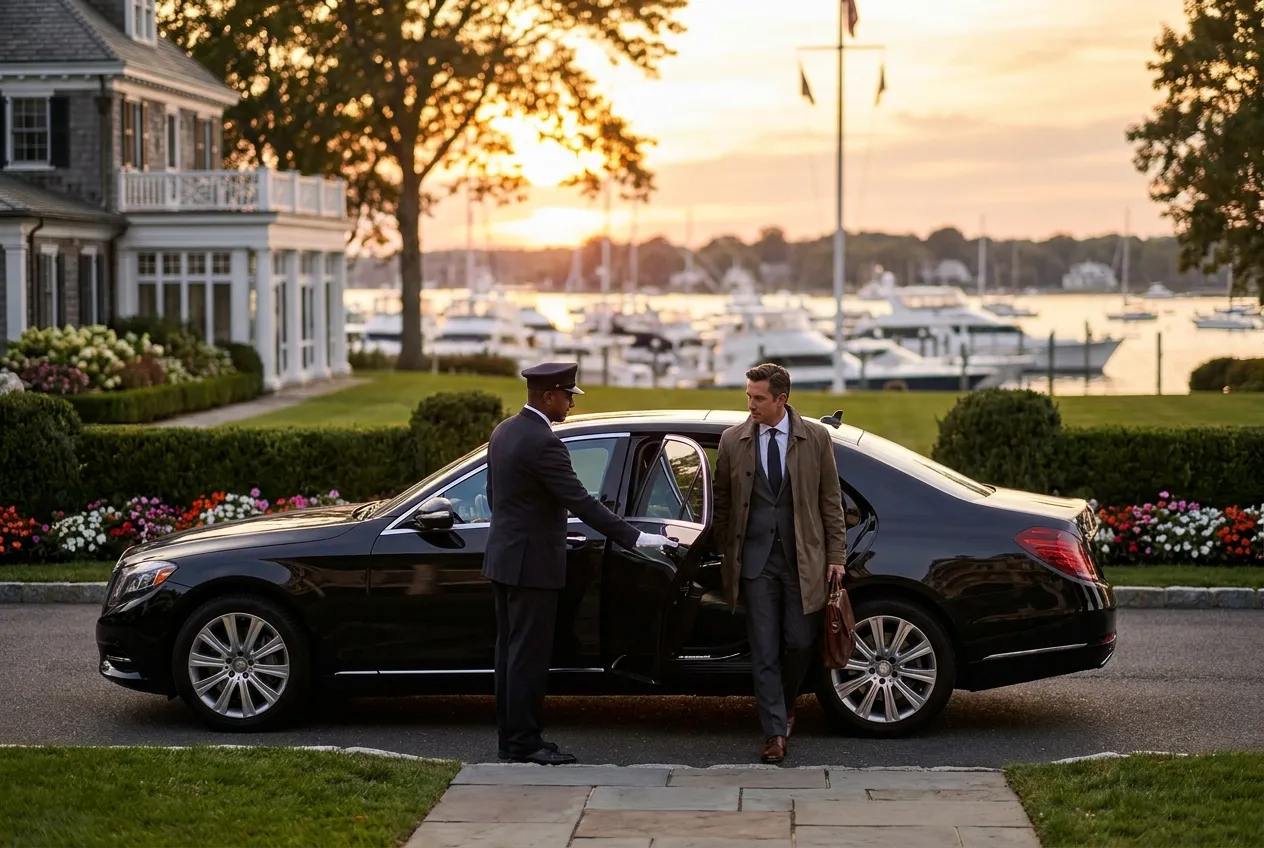
Sedan (1–3 passengers): Perfect for quiet, discreet executive transport. A Mercedes or Cadillac sedan offers a polished look without excess—ideal for a CEO heading to a one-on-one client dinner. Minimal luggage capacity, maximum discretion.
SUV (3–6 passengers): The versatile workhorse. SUVs provide extra luggage room for briefcases or gifts, comfortable seating, and a commanding presence. Use these for small client groups or when you need flexibility for multiple pickups across neighborhoods.
Sprinter (7–14 passengers): When your group hits double digits, a sprinter van delivers stand-up entry, social cabin space, and efficient single-vehicle logistics. Everyone travels together, conversation flows naturally, and you avoid the complexity of coordinating multiple sedans.
Minibus / Mini Coach (15–24 passengers): Larger celebrations or departmental outings call for a minibus. You'll get comfortable seating, climate control, and onboard amenities while keeping the group unified. A mini coach works beautifully for teams heading from the office to a Brooklyn or Queens restaurant.
Motor Coach / Bus (25+ passengers): Company-wide events or large board gatherings may require a full motor coach. These vehicles offer maximum seat capacity, undercarriage luggage bays, and aisle space for mingling. If you're transporting 30 or more people, a coach becomes the most practical and cost-effective solution.
Choosing the right vehicle isn't just about fitting bodies into seats—it's about matching the formality, comfort level, and logistical efficiency your evening demands. A diverse fleet gives you options; knowing your group profile lets you pick wisely.
Fleet Standards Matter: Safety, Cleanliness, and Professionalism
Not all transportation services are created equal. When you're representing your company or hosting clients, clean and well maintained vehicles are non-negotiable. Scuffed interiors, stale air, or mechanical issues send the wrong message before anyone even reaches the restaurant.
Insist on professional chauffeurs who are vetted, trained, and route-savvy. The right driver doesn't just navigate—they anticipate traffic, adjust timing, and handle last-minute changes without flustering your guests. On-time arrivals start with drivers who know how to read NYC's rhythms: construction detours, evening rush patterns, and venue access quirks.
Luxury vehicles elevate the experience. Expect maintained vehicles with spotless cabins, working climate controls, device charging ports, and a sense of elegance that reflects your brand standards. This is where excellence and world-class service show up in the details: the quality of the leather, the silence of the ride, the professionalism of the greeting. Reliability isn't optional when your reputation is riding along.
Route Design and Timing Buffers (NYC Reality Check)
Even a short trip across Manhattan can derail without proper planning. Map out your full sequence: office pickups, restaurant arrival, possible after-dinner lounge stop, final drop-offs. Factor in real transit times—midtown to SoHo isn't 15 minutes at 6 PM; it's closer to 35.
Add buffers everywhere: valet queues at popular venues, curbside congestion, weather delays, and the occasional guest running five minutes behind. If you're coordinating multiple vehicles, build in staging time so arrivals don't domino. A staggered approach—first vehicle departs 10 minutes ahead, second follows—can smooth out inevitable variability.
If your plan includes any shuttle segments or walking gaps between transportation and venue entrance, communicate that clearly. Guests in formal attire or heels need to know. Reliable service means accounting for these real-world frictions, not pretending they don't exist.
Pickups, Drop-Offs, and Multi-Stop Coordination
Orchestrating multiple pickups demands clear communication. Share live ETAs with all passengers via text or email. Provide explicit curbside instructions: which corner, what landmark, which building entrance. Midtown office towers have a dozen possible pickup points; specificity prevents chaos.
Understand venue policies before arrival. Does the restaurant have dedicated valet lanes? Are drivers expected to circle or stage on a side street? Clarify return pickup timing—will guests want transport immediately after dessert, or will they linger? Assign one planner as the central contact who relays updates to dispatch, who then communicates with drivers. This single-thread coordination prevents conflicting instructions and keeps everyone on-time.
For larger groups, consider a lead vehicle strategy: the first car arrives, confirms conditions, and radios adjustments to following vehicles. Small details—like having the chauffeur hold a discreet sign for out-of-town executives at an airport arrival—make a tangible difference in service quality.
Comfort and Brand Experience Inside the Vehicle
Once guests are seated, the interior environment becomes your brand ambassador. Quiet cabins allow conversation without shouting over road noise. Climate control that actually works matters more than you'd think in July or February. Bottled water, USB ports, and a cohesive look across your diverse fleet signal that this is luxury chauffeured service, not improvised rideshare.
Consider vehicle aesthetics. A traditional limousine or limo offers a classic, celebratory look—great for milestone client wins or VIP treatment. A sleek black car delivers understated sophistication, perfect for executives who prefer low-profile elegance. Both have their place; choose based on the evening's tone and your company culture.
Stylish doesn't mean ostentatious. Premium transportation is felt in the smoothness of the ride, the attentiveness of the driver, and the lack of small annoyances. When guests step out at the restaurant composed and ready, you've delivered.
Admin & Approvals: Make Finance Happy
Corporate transportation planning isn't complete until billing and approvals are locked. Partner with a transportation service that offers consolidated invoicing: one PO, one invoice, itemized by rider, department, or cost center as your finance team requires.
Align your booking with corporate travel policies early. Does your company mandate specific vendors or spending caps? Confirm SLAs around service reliability—what guarantees exist for on-time performance, vehicle substitutions, or last-minute changes? Document these in writing.
Create approval templates for recurring events. If you host quarterly board dinners, establish a repeatable process: same vehicle mix, same billing codes, same planner contact. This reduces administrative friction and builds a relationship with your transportation company, leading to better service over time. Work with a provider that understands corporate transportation nuances, not one-off consumer bookings.
Pricing Models and How to Control Costs
Transportation costs vary by booking structure. Hourly packages work well for events with uncertain timing—dinner might run long, guests may add a lounge stop. Point-to-point pricing suits straightforward pickups and drop-offs with predictable schedules.
Match vehicle size carefully. Running two SUVs when one sprinter would suffice inflates costs unnecessarily. Conversely, cramming 15 people into three sedans creates coordination headaches that erode the premium experience. Do the math: sometimes a larger vehicle delivers better per-passenger value while simplifying logistics.
Timing matters. Early evening departures (5–6 PM) or late starts (post-8 PM) may avoid peak demand windows, potentially lowering rates. Minimize unnecessary standby time—if drivers are waiting three hours while you dine, that's billable time better structured as a return pickup. Ask your transportation solutions provider to model different scenarios so you can see cost implications before committing.
Special Cases: Airport, VIP, and Large Outings
Some evenings require extra planning layers. If executives are flying in for the dinner, coordinate airport pickups with precision. Track flight arrivals in real-time, allow buffer for customs or baggage, and have drivers monitor delays. Vehicles should have space for garment bags, gift bags, or presentation materials—luggage isn't always a rolling suitcase.
VIP guests may need staged arrivals: have their vehicle arrive five minutes after the host settles in, not simultaneously in a jumbled curb scene. For company outings involving a motor coach and 40 employees, confirm seat counts, verify aisle width for socializing, and ensure the venue has coach-accessible loading zones.
One clarification: corporate dinner transportation differs fundamentally from wedding transportation. Weddings center on celebration and flexibility; corporate events demand punctuality, discretion, and brand alignment. Your transportation company should understand these distinct requirements without explanation.
Tech & Communication: Keep Everyone in the Loop
Real-time updates prevent anxiety. Quality transportation services send automated texts or emails as vehicles dispatch, approach pickup points, and arrive. Planners should have direct dispatcher contact for itinerary changes—flight delays, extended meetings, sudden headcount shifts.
If your provider offers it, download our mobile app for live ETAs and direct driver messaging. Even without an app, confirm communication protocols: Who do guests text if they're running late? How do drivers signal they've arrived? What's the escalation path if something goes wrong?
Transparency builds trust. Guests who know exactly when their ride is three minutes out can wrap up conversations, grab coats, and move to the curb efficiently. Drivers who receive updated pickup times avoid circling blocks unnecessarily. Clear communication loops—planner to dispatch to driver to guest—turn complexity into choreography.
Why Professional Chauffeurs Beat DIY, Rentals, and Rideshare
You could ask employees to drive rental cars, split everyone into rideshare pools, or rely on public transit. But each option trades reliability and presentation for perceived savings.
Rental cars require designated drivers (who can't drink), parking coordination, and liability exposure. Rideshare is unpredictable: surge pricing, driver cancellations, inconsistent vehicle quality, and zero accountability if something goes wrong. Public transit works for individuals but collapses under group logistics, formal attire, and luggage.
A professional chauffeur service offers one planner contact, vetted driver standards, vehicle guarantees, and recourse if expectations aren't met. Your reputation isn't riding on whether a random rental or gig driver happens to have a good night. Trust and professionalism have value, especially when clients are involved.
Sample Corporate Dinner Setups (3 Scenarios)
Client Entertainment (8 guests): Deploy two SUVs. First picks up four executives at the Midtown office, second collects four clients from their hotel. Both converge at a SoHo restaurant for a 7 PM reservation. After dinner, vehicles transport everyone to an Uptown cocktail lounge for a nightcap, then execute separate drop-offs—clients to hotel, executives home or back to office. Total route time: 3.5 hours with staging buffers.
Team Celebration (14 guests): One sprinter handles a loop with two pickup points—half the team from the office, half from a nearby coworking space. Vehicle proceeds to a Brooklyn venue, waits during a two-hour dinner, and returns everyone to Manhattan drop-off locations. Simplified coordination, unified experience, cost-effective for mid-sized groups.
Board Dinner (30 guests): A mini coach transports 28 board members from the corporate headquarters to an upscale venue, while a sedan separately brings the board chair and CFO who are meeting beforehand. The sedan arrives 10 minutes ahead to allow the leadership pair to greet arriving board members. Post-dinner, the coach executes a phased return with valet coordination to avoid backups. Extra route planning handles timing and curb access at a high-visibility location.
How CoreCar Delivers a Smooth Evening
CoreCar specializes in providing transportation that matches the precision your corporate events demand. Our fleet of luxury vehicles—from executive sedans to full motorcoaches—is maintained to impeccable standards, and our professional chauffeurs bring route expertise and calm professionalism to every booking.
We handle the details planners care about: consolidated billing aligned with your corporate travel policies, real-time dispatch communication, responsive adjustments when plans shift, and on-time execution that protects your evening's success. Whether you need a single black car for a CEO dinner or a coordinated fleet for a company celebration, we build transportation solutions around your objectives, not ours.
Quick Checklist
Before finalizing your corporate dinner transportation, confirm:
Headcount and needs: Total passengers, accessibility requirements, luggage or gift transport
Vehicle mix: Match sedans, SUVs, sprinters, minibuses, or motor coaches to group size and formality
Route and timing: Map full sequence with NYC-realistic buffers for traffic, valet, and staging
Single planner contact: Designate one person for dispatch communication and guest coordination
Billing alignment: Confirm invoicing structure, PO support, and SLAs on service reliability
Lock vehicles early: Fall dinner season books quickly; reserve your fleet as soon as dates firm
Final itinerary share: Distribute complete pickup/drop-off details to drivers 24 hours ahead
With the right planning and a trusted transportation partner, your corporate dinner becomes a seamless extension of your brand—polished, punctual, and stress-free from first pickup to final drop-off.