How to Stay Healthy While Traveling During Cold and Flu Season
You’ve got a red-eye to Chicago, a full day of meetings, a dinner you can’t skip, and a flight back Thursday morning. You don’t have time to get sick.
The problem is, the travel schedule that makes you productive also makes you vulnerable. Airports, planes, hotels, disrupted sleep, time zone crossings, and a diet that runs on coffee and conference sandwiches are a near-perfect storm for your immune system.
This guide is not about becoming a germophobe. Most of these tactics take under two minutes. Some you’re probably already doing. The goal is a simple, practical system that keeps you in the game through cold and flu season without disrupting the way you work or travel.
Why Business Travelers Are More Vulnerable
The statistics are not encouraging. Frequent business travelers—defined as those flying two or more times per month—get sick at roughly twice the rate of non-travelers during peak respiratory illness season. There are several compounding reasons for this.
Airports and planes concentrate exposure. A busy hub like JFK, Newark, or O’Hare processes tens of thousands of travelers daily. Security lines, gate areas, and jetways funnel large numbers of people into close contact in poorly ventilated spaces. The plane itself is a closed environment for two to six hours.
Sleep deprivation suppresses immunity directly. Research published in the journal Sleep found that people who sleep fewer than six hours per night are four times more likely to catch a cold when exposed to the virus than those sleeping seven or more hours. Business travel is structurally hostile to sleep: early morning flights, late dinner meetings, hotel environments that interfere with sleep quality, and time zone shifts that disrupt circadian rhythm.
Chronic stress raises cortisol. Elevated cortisol over extended periods measurably suppresses immune function. If you are a VP or Director managing a full calendar of travel, client commitments, and internal pressure, your baseline cortisol level during peak travel season is working against you before you board the plane.
Dehydration is underestimated. Airplane cabin humidity typically runs between 10–20%, compared to the 40–60% humidity your respiratory mucosa functions best at. Dry mucous membranes are less effective at trapping pathogens. This is mechanical vulnerability, not just discomfort.
Understanding why you’re vulnerable is the first step toward doing something about it.
Pre-Travel Preparation: The Week Before You Fly
The single highest-leverage intervention happens before you leave.
Get your flu shot, and get it early. The CDC recommends annual flu vaccination by the end of October, but if your schedule has been impossible, late is better than never. The 2025–26 vaccine is formulated against the currently circulating strains. It takes about two weeks to reach full efficacy, so plan accordingly.
COVID and RSV boosters. As of 2026, updated COVID-19 boosters remain recommended annually for adults, particularly those with significant exposure through travel. RSV vaccines are now available for adults over 60 and those with certain risk factors—worth discussing with your physician if that applies to you.
Protect your sleep in the days leading up to a trip. Banking sleep is not physiologically possible the way some people think, but consistently getting 7–8 hours in the week before heavy travel keeps your immune baseline where it needs to be. The night before an early morning flight is almost always going to be short—the question is whether you arrive at the airport already depleted.
Pack your health kit before you think you need it. The items below are worth having on every trip regardless of season. If you’re rummaging around a CVS at 9 p.m. in an unfamiliar city, you’ve already lost.
The business traveler’s health kit:
Hand sanitizer (travel size, 60%+ alcohol)
Saline nasal spray
Throat lozenges
Electrolyte packets (for dehydration recovery)
Your regular vitamins (don’t break routine mid-trip)
Zinc lozenges or zinc acetate (evidence supports modest symptom reduction if taken within 24 hours of symptom onset)
Melatonin (low-dose, for cross-timezone sleep)
Ibuprofen or acetaminophen
A rapid COVID/flu combo test strip—one or two, just in case
Supplements worth considering. The evidence on vitamin C is modest but real. Vitamin D insufficiency—extremely common in frequent travelers who spend most daylight hours indoors—is associated with increased respiratory illness susceptibility. If you haven’t had your levels checked, it’s worth doing. Elderberry extract has some supporting evidence for reducing cold and flu duration. None of these replace sleep and vaccination, but none require much commitment either.
At the Airport: Practical Hygiene Without the Paranoia
You are not going to avoid airports. You are going to use them intelligently.
High-touch surfaces are the real exposure risk. Viruses don’t float through the air very far in most circumstances—they spread through contact with contaminated surfaces followed by face-touching. TSA bins, escalator handrails, ATM keypads, and gate area seat armrests are among the most contaminated surfaces in any airport. Security bins in particular have been shown in studies to carry more viable pathogen DNA than most other airport surfaces.
The fix: use hand sanitizer immediately after clearing security, before you touch your face, your food, or your phone. That’s it. You don’t need gloves. You don’t need to avoid touching anything. You need 30 seconds of hand hygiene at the right moment.
Stay hydrated, aggressively. Buy water before you board. Bring a refillable bottle through security. The goal is arriving at your destination hydrated, which means drinking throughout the airport wait, not just on the plane.
Food choices matter in ways people underestimate. Airport nutrition options range from acceptable to genuinely bad. A meal high in refined carbohydrates and sugar right before a flight spikes blood glucose and creates a temporary immune suppression window. This is not a reason to go hungry—it’s a reason to choose the protein option over the pastry when you’re about to board.
On masking in 2026. Most business travelers are not wearing masks in airports or on planes at this point, and that’s a reasonable personal decision in most circumstances. If you are immunocompromised, traveling during a documented high-transmission period, or heading into a week with meetings you absolutely cannot miss, a well-fitted N95 for the boarding process and first portion of a flight is still a meaningful risk reduction tool. This is not a political statement—it’s a mask. Use it if your situation warrants it, skip it if it doesn’t.
On the Plane: What Actually Helps
The air quality on commercial aircraft is better than most people assume. Modern jets use HEPA filtration systems that recycle cabin air through hospital-grade filters every two to four minutes. The air itself is not the primary risk. The surfaces are.
Window seat advantage is real. A Harvard T.H. Chan School of Public Health study found that passengers in window seats who remained largely seated had significantly lower illness rates than those in aisle seats. The mechanism is reduced contact with other passengers moving through the cabin. If you have flexibility in your seat selection, this is worth considering.
Wipe down your area before you settle in. Tray table, armrests, seat belt buckle, and the window shade if you’re using it. This takes 45 seconds with a sanitizing wipe. The tray table on a commercial aircraft rarely gets sanitized between flights. A 2015 study found that MRSA bacteria survived on airline seat pocket fabric for up to seven days. Take the 45 seconds.
Breathe through your nose. Your nasal passages filter and humidify incoming air far more effectively than your mouth. This sounds like minor advice. It’s not. Mouth breathers on dry cabin air are delivering unfiltered, unhumidified air directly to their airways for hours.
Nasal saline spray is underutilized. Using it once during a long flight keeps your nasal mucosa from drying out and maintains the mechanical barrier function that’s your first line of defense against airborne pathogens. It takes four seconds and costs $8.
Drink water. Not wine. Alcohol dehydrates you. One glass of wine at altitude has the dehydration effect of two glasses at sea level. If you’re flying on a Sunday night to be sharp Monday morning, the trade-off is not worth it. If you’re flying Friday afternoon to be functional at dinner, that’s a different calculation. Know the context.
At the Hotel: Often the Overlooked Variable
The highest-risk surfaces in a hotel room are the television remote, the light switches, the telephone handset, and the bathroom faucet handle. These are high-touch surfaces that often escape standard cleaning protocols. Give them a pass with a disinfecting wipe when you check in. It takes one minute and you’ll stop thinking about it.
Prioritize sleep quality, not just duration. Hotel rooms interfere with sleep through unfamiliar environments, noise, light, and temperature. The “first night effect” is a documented phenomenon where one hemisphere of your brain stays in lighter sleep in an unfamiliar environment. Bring a sleep mask if you’re light-sensitive. Bring earplugs if you’re noise-sensitive. Set the room temperature cooler than you think—the ideal sleep temperature is 65–68 degrees Fahrenheit.
Maintain your routine where possible. Disrupting your exercise, supplement, and sleep schedule all at once—which is what most business travel does—has a cumulative immune impact. Pick one or two anchors you maintain no matter what. Morning walk, your usual vitamins, consistent wake time. Predictability signals safety to your nervous system.
Eat something real. A full day of catered conference food and a client dinner is not the end of the world, but if you have any control over one meal, make it nutritionally reasonable. A salad and protein before a 10 p.m. flight beats airport pretzels and a Delta Biscoff.
Post-Pandemic Considerations for 2026
Respiratory illness management in 2026 looks different than it did even two years ago. A few things worth knowing:
COVID is endemic, not gone. The 2025–26 wave was moderate, but breakthrough infections in vaccinated individuals still happen. If you develop respiratory symptoms during a business trip, a rapid combo test (COVID/flu) is worth doing before you get on a plane back home or walk into a full-day conference. This is not about fear—it’s about not being the person who took down half the leadership team.
RSV is now on the adult radar. RSV was historically considered a children’s illness, but it causes significant disease in adults over 60 and those with respiratory conditions. Vaccines are available. Ask your physician.
Travel insurance has evolved. Post-2020, most comprehensive travel insurance policies now include trip cancellation for documented illness, including COVID. If you’re traveling internationally or booking high-cost domestic travel, this is worth having.
Why Your Ground Transportation Choice Matters
This one gets overlooked entirely in most business travel health guides, but it’s worth addressing directly.
Getting from the airport to your hotel on a Tuesday morning in New York means one of a few options: subway, taxi or rideshare, or private car service.
The MTA subway at 8 a.m. places you in a car with dozens of strangers in a poorly ventilated underground environment for 30–60 minutes. You’re holding handrails and sitting on seats that are cleaned on an irregular schedule. If you’ve just landed from a red-eye and your immune system is already working below capacity, this is a meaningful additional exposure.
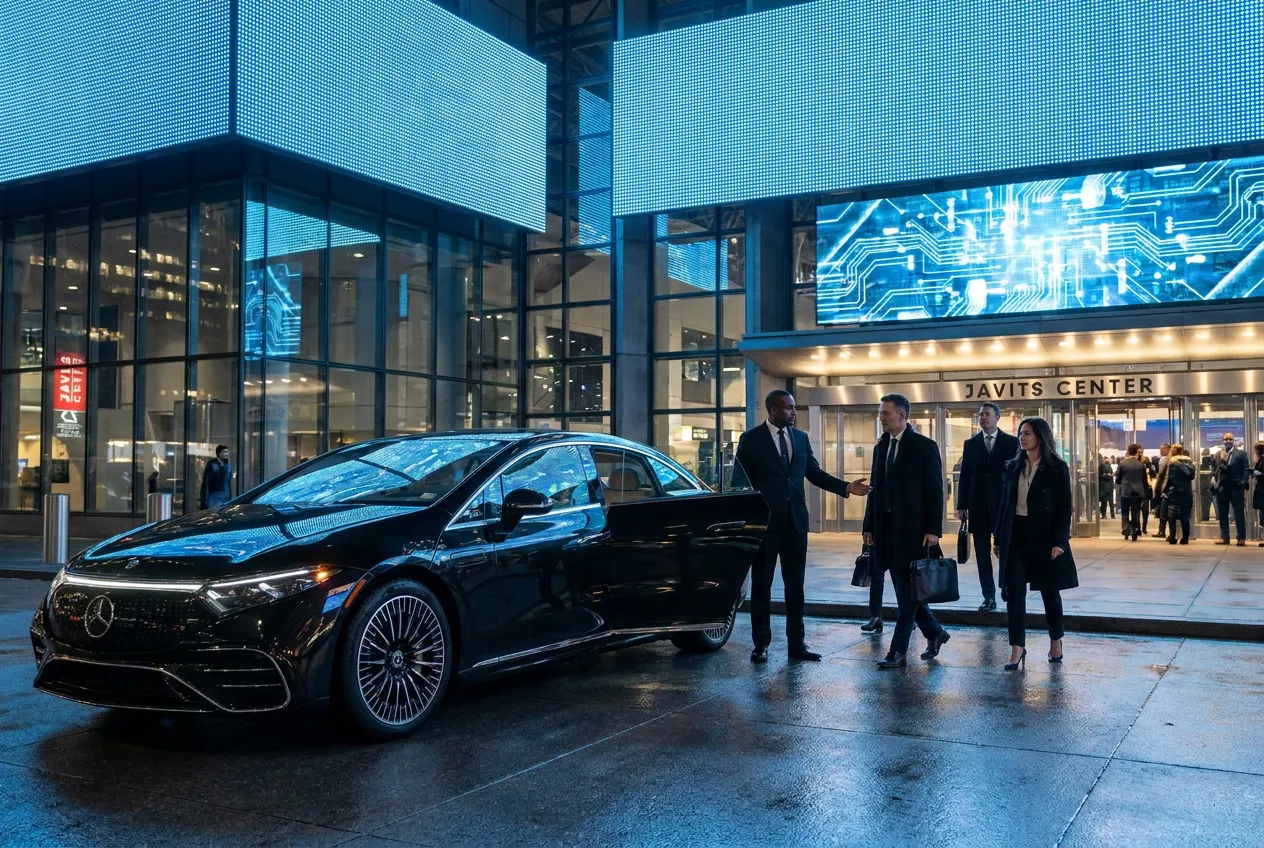
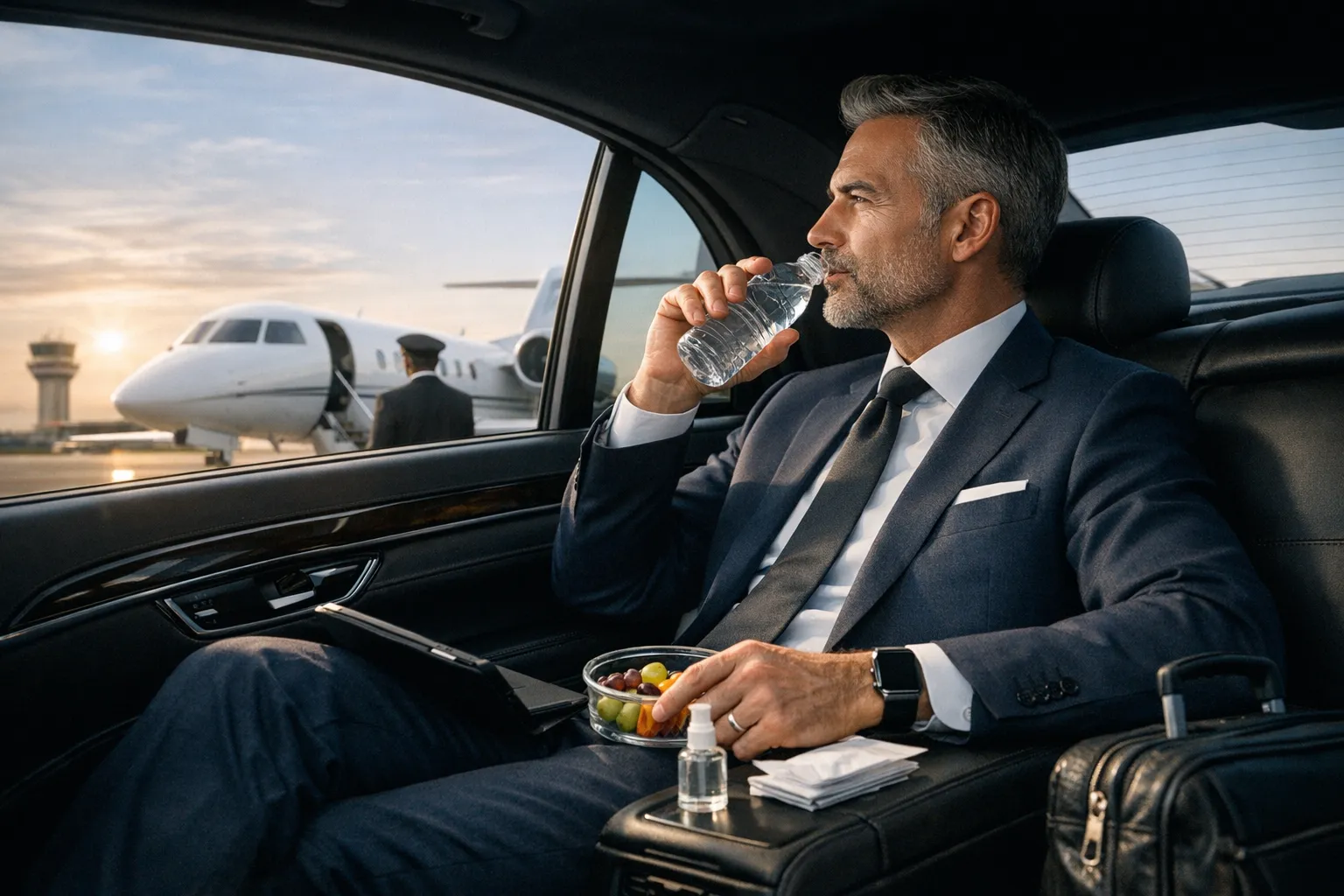
A private car service puts you alone in a clean, climate-controlled vehicle with a professional chauffeur. No shared surfaces beyond your seat. No crowds. No standing in a moving car trying not to touch anything. The exposure difference is not trivial when you’re already running depleted.
For executives who travel two to four times per month and genuinely cannot afford to lose two or three sick days to an illness acquired in transit, this distinction matters. CoreCar’s vehicles are maintained to commercial cleanliness standards. You’re not sharing the back seat with whoever booked the ride before you.
Beyond illness, the ability to decompress, make calls, prep for meetings, or simply not be in a crowd for 40 minutes after a flight is a genuine productivity and wellness benefit.
Business Traveler Health Checklist
Print it, screenshot it, or memorize it. This is the full system compressed.
Before you leave:
Annual flu shot current
COVID/RSV boosters current (check with your physician)
7+ hours sleep in the days prior
Health kit packed (see full list above)
Rapid test strips in bag
At the airport:
Hand sanitizer after security, before touching face or food
Hydration started—water, not coffee
Reasonable meal choice before boarding
On the plane:
Disinfecting wipe on tray table and armrests
Water (not alcohol) throughout flight
Saline nasal spray used once on longer flights
Window seat if available
At the hotel:
Wipe high-touch surfaces on arrival
Room temperature set to 65–68 degrees
Sleep mask and earplugs if needed
One nutritionally reasonable meal per day
If you develop symptoms:
Rapid test before getting on a return flight
Notify your physician if symptoms are significant
Check travel insurance coverage for trip interruption
Stay Sharp Through the Season
Cold and flu season runs roughly October through March in the Northern Hemisphere, which aligns almost perfectly with Q4 planning, holiday travel, and Q1 kickoff—the most intensive travel period on most business calendars. Getting sick in November or January is not bad luck. It’s a predictable outcome of specific, correctable behaviors.
None of the tactics in this guide require a major lifestyle change. They require 10–15 minutes of preparation, a few consistent habits, and the discipline to choose your ground transportation as thoughtfully as you choose your hotel.
Planning a trip into the New York area this season?
Book a private car service with CoreCar and take one variable completely off the table. Professional chauffeur, clean vehicle, direct route—from your arrival gate to your hotel or meeting, without the subway crowds or rideshare uncertainty.