How to Make Economy Feel Like First Class: 15 Upgrades That Work
Nobody loves economy class. But plenty of people — road warriors, startup founders, budget-conscious executives — fly it regularly and arrive fresh, comfortable, and ready to work.
The difference between a miserable 4-hour flight and a tolerable one isn’t seat 2A. It’s about 15 specific decisions made before, during, and after the flight.
This is the guide that a friend who flies every week would actually give you. Not a brochure for business class. Real tips, honest gear recommendations, and one uncomfortable truth about where most travel comfort is actually lost.
Before You Fly
Tip #1: Stop Picking Your Seat Without SeatGuru
Seat 22E on a Boeing 737 is a middle seat that doesn’t recline, sits directly in front of the lavatory, and is adjacent to the galley. Seat 22F — literally one over — reclines fully and is next to a window.
SeatGuru (seatguru.com) color-codes every seat on every plane configuration so you know exactly what you’re getting before you pay the seat selection fee. Green seats are good. Yellow seats have caveats. Red seats are the ones flight attendants privately call “the penalty box.”
Before you click anything on your booking, open SeatGuru, type in your flight number, and check the map. It takes 90 seconds and can save you 4 hours of misery.
The pro move: Exit row seats and bulkhead rows have more legroom but no under-seat storage and harder armrests. If you carry a personal item you’ll want underfoot access to, avoid bulkhead rows.
Tip #2: Consider Premium Economy as Your New Default
If your company’s travel policy has a hard economy-only rule, skip this one. But if you have any discretion in booking — or if you’re a solo traveler on your own dime — premium economy has quietly become one of the best value positions in commercial aviation.
Delta Comfort+, United Economy Plus, and American’s Main Cabin Extra typically run $60–$150 more than basic economy for domestic routes. For that you get 4–6 extra inches of legroom, priority boarding, and in many cases, dedicated overhead bin access. On international routes, full premium economy cabins on carriers like Singapore Airlines and Virgin Atlantic are categorically different products — lie-flat-adjacent seats, real cutlery, and a cabin ratio that means you’re not fighting for armrests.
The math: if your time is worth anything to you professionally, $100 to arrive at your destination having actually slept is not a luxury. It’s a productivity investment.
Tip #3: Buy a Lounge Day Pass Before Your Next Flight
Here’s a secret that most economy travelers don’t know: airport lounges are not just for first class passengers and elite status holders.
Most major airport lounges sell day passes. Priority Pass day passes run $35–$59 depending on location. American Express Centurion Lounges sell day passes at select locations. Plaza Premium lounges — available at JFK, LAX, and dozens of international airports — are accessible for around $45–60 per entry.
What you get: reliable Wi-Fi, a meal (not a $22 airport sandwich), quiet seating, and power at every station. The transformation in your pre-flight state — calm instead of frantic, fed instead of hungry, charged instead of at 14% battery — carries through the entire flight.
If you fly more than 8 times a year, Priority Pass at $429/year pays for itself in lounge access alone, plus many credit cards include it at no additional charge.
Gear That Actually Makes a Difference
Tip #4: Noise-Cancelling Headphones Are Not Optional
This is not an opinion. This is the single most impactful purchase a regular flyer can make.
The baseline cabin noise on a commercial aircraft is approximately 85 decibels — equivalent to a busy restaurant, sustained for hours. This level of ambient noise accelerates fatigue, makes concentration harder, and genuinely disrupts sleep.
Active noise-cancelling headphones reduce that ambient noise by 20–30 decibels. The two best options in 2026:
Sony WH-1000XM5 ($350): The benchmark for noise cancellation depth. Folds flat, 30-hour battery, and the ANC is so effective that first-time users often do a double-take at how quiet the cabin becomes.
Apple AirPods Max ($549): Better spatial audio, seamless Apple device integration, and a slightly more premium build. The noise cancellation is marginally better on some frequencies. Heavy for some users.
Either one will change how you experience flying. This is not a “nice to have.”
Tip #5: A Travel Pillow Worth Carrying
Most travel pillows are theatrical. They’re the shape of a neck pillow, they compress to the size of a football, and they provide the neck support of a crumpled sweatshirt.
The two that actually work:
Trtl Pillow Plus ($60): A scarf-style pillow with an internal plastic support frame. It holds your head at the correct cervical angle for sleep. Packs flat. Looks slightly odd. Works.
Cabeau Evolution Classic ($50): A traditional U-shape design but with a memory foam density that most competitors don’t match. The clip at the front keeps it from sliding forward.
The rule: if your pillow requires inflating or takes up more than 1 liter of volume, leave it home.
Tip #6: Compression Socks Are for Everyone, Not Just Grandparents
At cruising altitude, cabin pressure drops to the equivalent of 6,000–8,000 feet. Combined with hours of immobility, this causes measurable fluid retention in the lower legs — even in healthy 30-year-olds.
Compression socks (15–20 mmHg compression) applied before boarding reduce swelling, lower DVT risk on long flights, and mean you land feeling less like your feet belong to someone else.
The best ones for travel: Sockwell Circulator ($25) or CEP Travel Compression Socks ($55) if you want a thinner profile that fits under dress shoes.
Tip #7: Eye Mask — The Overlooked Essential
Window shades go up at 6am for the cabin service routine regardless of what time zone your body thinks it’s in. An eye mask is a $15–25 solution that buys you another 90 minutes of sleep.
The Manta Sleep Mask ($45) is the category leader because it cups around the eyes instead of pressing against them — meaning it doesn’t disturb eyelashes, doesn’t press on eyelids, and creates total darkness without pressure. If you’ve tried cheaper masks and found them uncomfortable, this is why.
In-Flight Hacks
Tip #8: Hydrate Intentionally, Not Reactively
Airplane cabin humidity runs at roughly 10–15% — lower than most deserts. At this humidity level, you lose approximately 8 ounces of water per hour of flight without feeling noticeably thirsty.
The result: you land dehydrated, which manifests as fatigue, headache, poor concentration, and irritability. You attribute this to “jet lag” or “the flight.” It’s mostly dehydration.
The fix is boring but effective: drink 8 ounces of water for every hour of flight. Bring an empty 20-ounce bottle through security and fill it at the fountain before boarding. Ask flight attendants for two waters at every service pass. Skip the sparkling water — carbonation adds to bloating at altitude.
Tip #9: Skip the Alcohol Until You Land
Alcohol at altitude is not the relaxation tool it appears to be. At reduced cabin pressure, alcohol is absorbed faster and metabolizes differently, delivering more pronounced impairment and — critically — dramatically worsening dehydration.
The “one drink to take the edge off” on a morning flight is also the “why am I foggy at my 2pm meeting” on the other end.
Save it for the hotel bar after your first meeting. You’ll taste it more, absorb it better, and wake up the next morning functional.
Tip #10: Download Everything Before You Taxi
Gate Wi-Fi is inconsistent. In-flight Wi-Fi is expensive, slow, and drops at the worst moments. The traveler who arrives at their seat with a Netflix episode, two Spotify playlists, and a Kindle book already downloaded is the traveler who has a genuinely good flight.
Specific checklist for the night before a flight:
Download one episode of whatever you’re watching (Netflix, HBO Max, or your airline’s app)
Download 2–3 podcasts in your app of choice
Queue 3 articles in Pocket for offline reading
Load your boarding pass into Apple/Google Wallet
Charge everything to 100%
The boarding pass in Wallet tip specifically: it works with airplane mode on, doesn’t require cell signal at the gate, and works as a backup if your airline’s app crashes.
Tip #11: Rethink When You Eat Before Boarding
The standard airport eating pattern is: rush through security, buy an overpriced sandwich at the gate, eat it in 4 minutes, board. You arrive at your seat with a meal that’s settling badly at altitude, uncomfortable, and sedating.
A better approach: eat a real meal 90 minutes before your flight at a sit-down restaurant in the terminal (or the lounge). Give it time to digest before you get horizontal. This is a reason the lounge tip (#3) pays dividends beyond just Wi-Fi — you have somewhere to sit and eat without the gate chaos.
If you’re flying early morning and the lounge isn’t open: pack something from home. A banana, trail mix, and a proper breakfast at home beats an airport wrap every time.
The Ground Game
Tip #12: Where Most Comfort Decisions Are Actually Made
Here’s the uncomfortable truth about flight comfort: the tone of your travel day is set before you ever reach the gate.
If you spent the 45 minutes before arriving at the airport arguing with a surging rideshare app, racing to find a last-minute driver, standing in a parking shuttle with your roller bag wedged against your shins — you board that plane already stressed, already behind, already compromised.
The travelers who consistently describe their trips as “manageable” or “fine, actually” share one habit: they don’t treat the airport transfer as an afterthought.
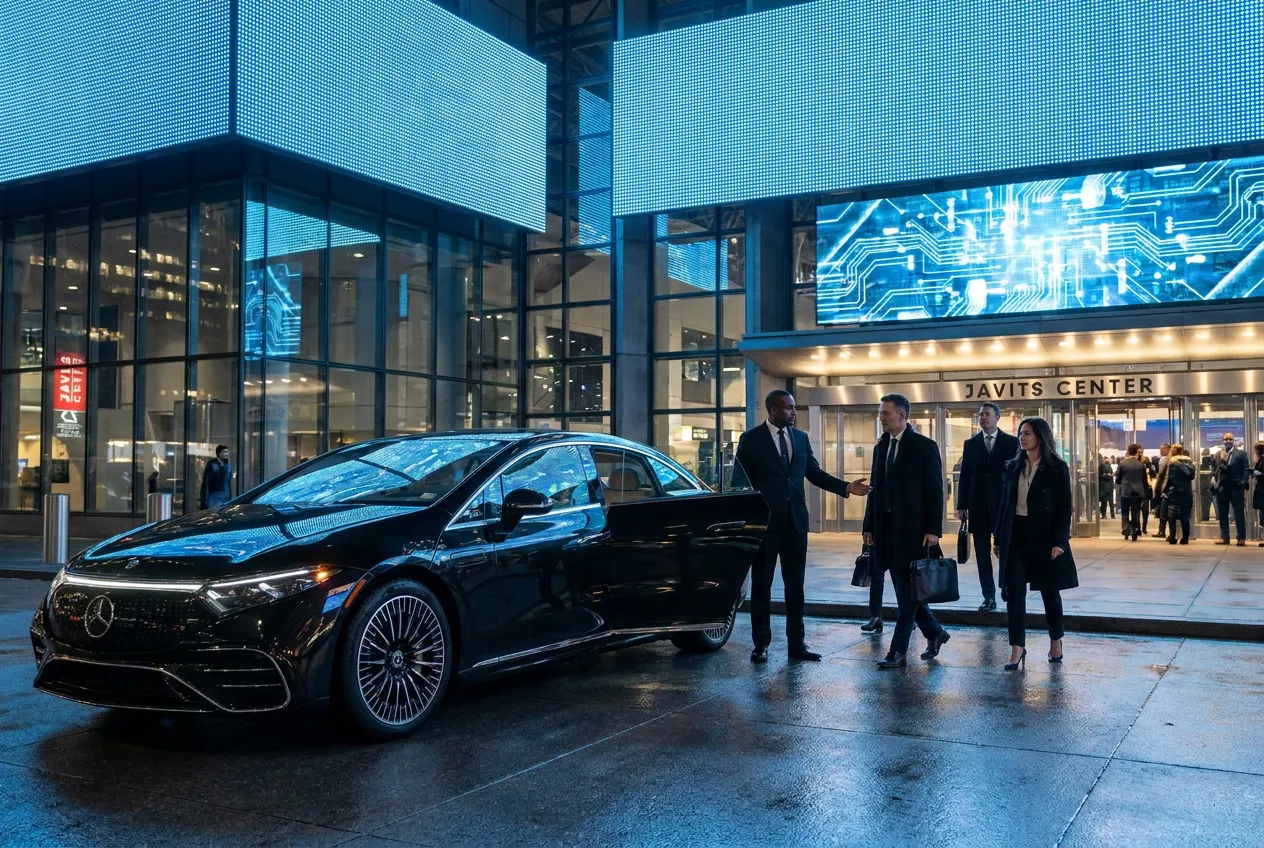
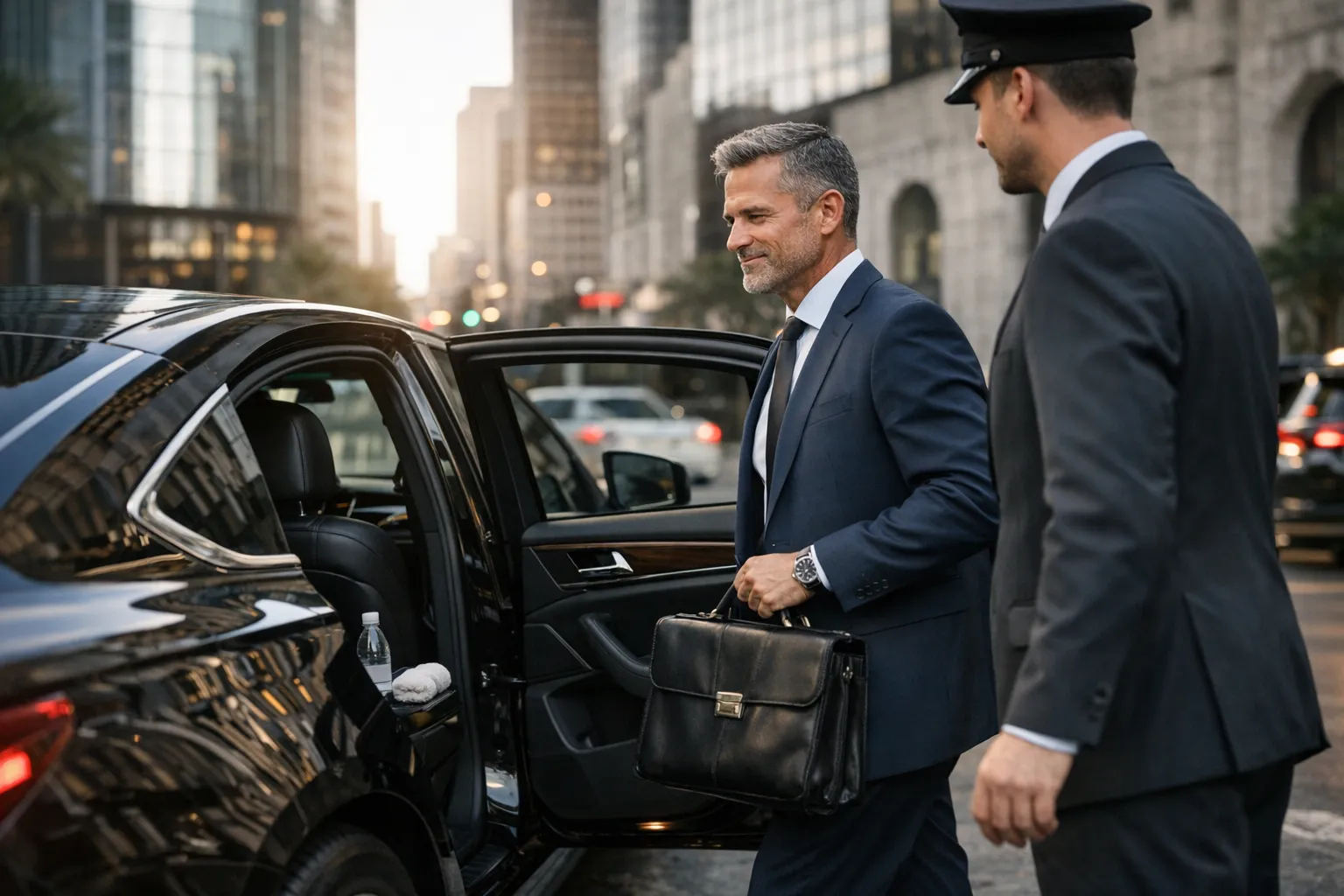
Pre-booked private car service is the ground game decision that separates a composed, productive travel day from a chaotic one. No surge pricing. No pooled rides. No guessing whether the driver knows which terminal. Your driver tracks your departure in real time, meets you curbside, and gets you to the airport in a quiet, comfortable vehicle where you can review your notes, make a call, or just breathe for 40 minutes before the sprint begins.
For NYC-area travel, CoreCar handles exactly this — corporate airport transfers to and from JFK, LGA, and EWR in vehicles like the Volvo S90, Lexus RX350, Audi A8L, and Cadillac Escalade. Pre-booked, flight-tracked, professionally driven.
The formula: calm start + lounge + smart seat = a flight that actually feels manageable.
Tip #13: Walk the Terminal Before You Sit Down
This sounds like advice your doctor gives you, but there’s a practical travel reason: if you have more than 45 minutes before boarding, walk. Not to the newsstand and back — a real 10-minute walk through the terminal.
The mild movement reduces the initial leg stiffness of prolonged sitting, wakes your circulatory system before you park it at 35,000 feet for hours, and burns just enough physical energy to make sleep on the plane more likely.
Treat boarding time minus 20 minutes as your target for being at the gate. Everything before that is your movement window.
Tip #14: Use the Airline App to Self-Manage Disruptions
The line at the gate desk when a flight is delayed is the single most inefficient place to solve a travel problem. While everyone else is queuing to talk to an overwhelmed gate agent, you should be on the airline’s app or chat function, already rebooking.
Most major airlines now allow same-day rebooking through the app, including seat selection on the new flight, without needing to speak to an agent. American, Delta, and United all have this capability in 2026. The app also shows you real-time seat availability on alternative flights, which the person at the counter is reading from the same screen.
Set up push notifications for your flight from the moment you check in. Gate changes in airports like JFK and LGA can happen 30–40 minutes before boarding without announcement.
Tip #15: Arrive With a Landing Protocol
The last five minutes of a flight are where most travelers lose the efficiency they spent the whole trip building.
Build a landing protocol: in the final descent, pack your bag completely, find your passport/ID, confirm your transportation arrangement, and note the terminal you’re arriving into. If you have a connection, know your gate before the wheels touch.
The goal is to be the person who stands up the moment the seatbelt sign turns off with a bag already zipped, a car already confirmed, and a clear plan. Not the person hunting for their AirPod case in the overhead bin while 40 people wait.
Pre-booking your car home means one less thing to manage at this exact moment. You already know who’s picking you up, where they’re meeting you, and that they’ve been tracking your flight since before you landed.
The Short Version
Economy doesn’t have to be punishment. The travelers who make it work aren’t lucky. They’re prepared.
Gear: get the headphones, the pillow, the compression socks. Strategy: choose your seat deliberately, use the lounge, skip the alcohol. Ground game: don’t let the transfer undo all of it.
Start with whatever you don’t currently do. One change at a time. Your future self — sitting in 22A with noise-cancelling headphones on, fully charged, mildly hydrated — will appreciate it.
CoreCar provides premium corporate car service to JFK, LGA, and EWR airports serving the NYC, NJ, and CT tri-state area. Book at corecar.com.
Last updated: March 2026.