Business Travel Safety - 10 Essential Tips for 2026
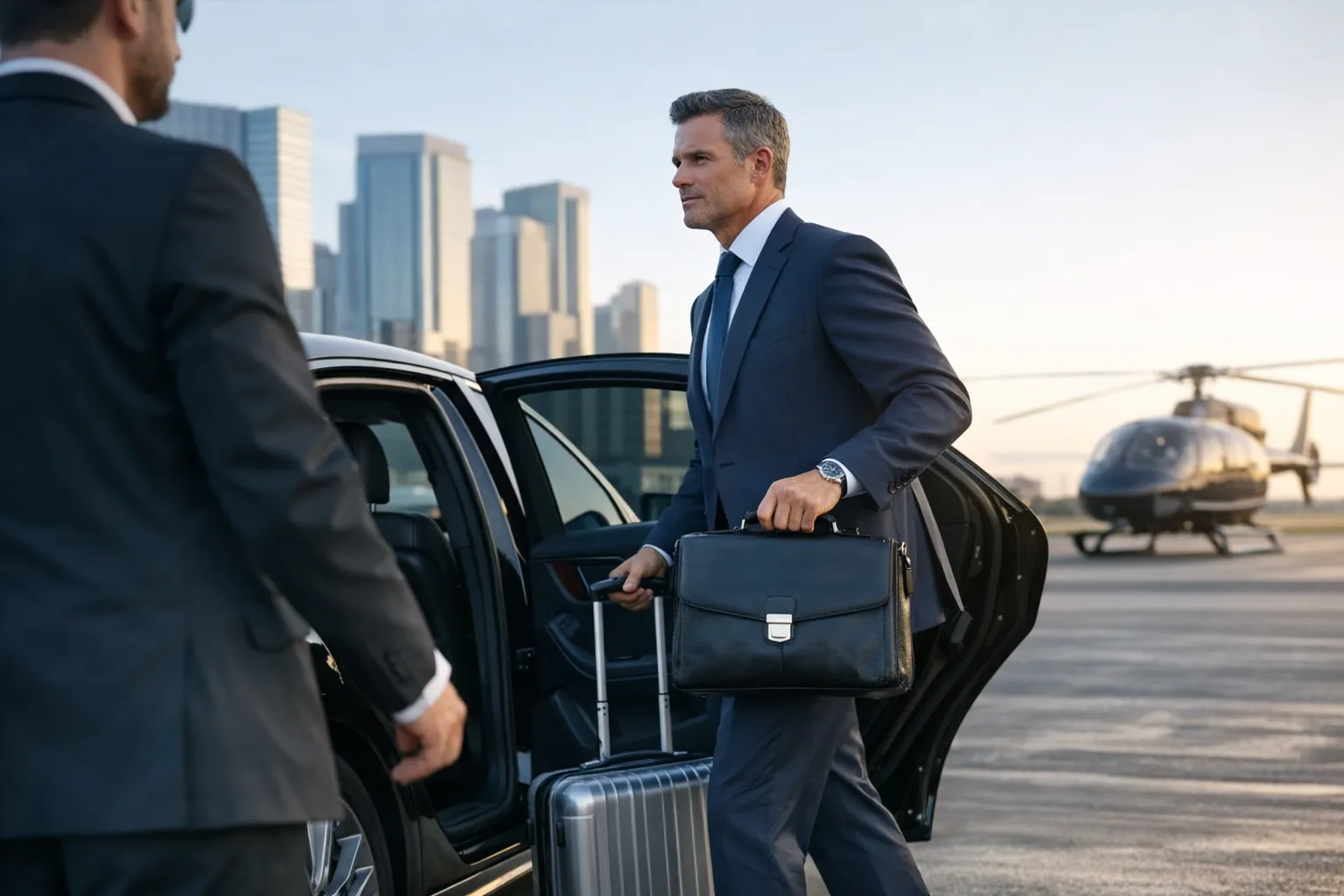
Most business travelers think about safety exactly once per trip: when something goes wrong.
That’s the wrong approach. Safety isn’t reactive planning — it’s a set of habits and systems that prevent the problem from happening in the first place. The executive who loses a laptop with 3 years of client data to a man-in-the-middle attack on airport Wi-Fi didn’t have a bad day. They had a policy failure.
Whether you’re David — landing at JFK for your first NYC business trip — or a road warrior with 200,000 miles per year, these 10 tips will close the gaps in your travel safety protocol.
Tip #1: Cybersecurity — Treat Every Public Network Like It’s Hostile
Because it might be.
Public Wi-Fi at airports, hotels, and coffee shops is the most common vector for corporate data breaches among business travelers. A “free airport Wi-Fi” hotspot named something convincing — “JFK Terminal 4 Wi-Fi” — can be set up by anyone with $30 of hardware to intercept unencrypted traffic. This is called an evil twin attack, and it’s not theoretical. It’s documented regularly at major airports.
The non-negotiables:
Use a VPN every time you’re on a network you don’t control. NordVPN Business, ExpressVPN, and Cisco AnyConnect (for corporate-managed devices) are the current standards. Enable it before you open your email.
Disable auto-connect to open networks in your device settings. Your phone should not be silently connecting to networks named “Starbucks” every time you walk past one.
If your company has issued you a mobile hotspot (or if your phone plan supports tethering), use your own cellular connection instead of public Wi-Fi for anything sensitive.
For travel managers: Ensure your company’s MDM (Mobile Device Management) policy enforces VPN on all corporate devices when off-network. This should be automatic, not optional.
Tip #2: Personal Safety in Unfamiliar Cities — NYC-Specific Guidance
New York City is safer than its reputation in most of the media. It’s also a city of 8 million people where the gap between a sensible decision and a vulnerable one is sometimes a single street block.
General urban safety rules:
Walk with purpose. The most common street-crime targets are people who look visibly disoriented, distracted by their phones, or uncertain of where they’re going.
Keep your phone in your pocket, not in your hand, in crowded areas — subway platforms, Times Square, Grand Central during rush hour.
Be aware in late-night transit situations. The subway is generally safe but less predictable after midnight. Know your car service alternative before you need it.
NYC-specific:
Midtown, the Financial District, Tribeca, and the Upper East/West Sides are where most business travel happens — all low-risk for the standard business traveler.
If your hotel is near Penn Station or the Port Authority bus terminal, be alert in the surrounding blocks after dark, particularly on foot with visible luggage.
For late-night airport transfers or cross-borough trips, a pre-arranged car service removes the decision-making entirely. You’re not picking a driver at 1am from a crowded arrivals hall — you have a confirmed, professional driver waiting for you by name.
Tip #3: Health Safety in 2026 — Know Before You Go
Post-pandemic travel health protocols have settled into a sustainable set of practices that experienced travelers treat as routine, not exceptional.
Pre-trip:
Check the CDC and WHO travel health notices for your destination. Even domestic travel: outbreaks of norovirus, RSV, and regional respiratory illnesses show up in travel health advisories before they make general news.
Ensure your standard medications are packed in your carry-on (never checked luggage) with enough supply for 2 extra days beyond your trip. Pharmacies exist everywhere, but not always stocked with your specific generic.
Travel health insurance is not the same as regular health insurance. Standard employer health plans often have limited or no coverage outside your home network, particularly for international travel or out-of-network emergency care. Check your policy before you travel. Allianz, GeoBlue, and IMG are reputable travel health insurance providers that offer single-trip and annual plans.
At your destination:
Know the nearest urgent care clinic or hospital to your hotel. This takes 30 seconds on Google before you leave. Write the address down.
Pack a basic health kit: hand sanitizer (2oz), a small supply of Advil/Tylenol, antacids, antidiarrheal medication, and any prescription medications you take regularly.
For international travel: carry a complete list of your medications with generic drug names (brand names vary by country), along with your doctor’s contact information and your blood type.
Tip #4: Transportation Safety — Why Known Car Service Matters at 2AM
This is where business travelers make their most preventable mistakes.
At 11:30pm after a delayed flight, standing at the EWR arrivals level, you’re tired, carrying luggage, and your decision-making is operating at a fraction of peak capacity. This is the exact moment where “I’ll just grab whatever car is available” can go wrong.
The specific risks of unvetted transportation:
Unlicensed car operators (“gypsy cabs”) solicit fares at every major NYC-area airport arrival hall. They are illegal, uninsured, and unvetted. TLC (Taxi and Limousine Commission) regulations exist for your protection — drivers and vehicles must be licensed, inspected, and insured. An unlicensed operator has none of those requirements.
Rideshare surge pricing at midnight after a mass flight arrival can run 3–4x normal rates. The driver assigned may be unfamiliar with your destination, and the vehicle may not meet any standard for a business transfer.
The “follow me to my car” scenario outside the designated rideshare pickup area is a well-documented scam at JFK and EWR — approach who appear to be guides will offer to take you to a waiting car, which is unlicensed and overpriced.
The standard that protects you: Pre-booked, TLC-licensed corporate car service. Your driver is identified by name and a vehicle plate before you land. You meet them in the designated area. The vehicle is inspected and insured. The price is what you agreed to when you booked.
CoreCar operates at JFK, LGA, and EWR with TLC-licensed professional drivers and a commercial fleet. For late-night arrivals in particular — when your judgment is compromised and your options feel limited — having a pre-booked car waiting is worth far more than its convenience.
Tip #5: Document Protection — The Digital Copy Protocol
Lost passport stories are not rare. They happen to careful, experienced travelers. The difference between a lost-passport experience that resolves in 4 hours and one that derails a trip entirely is preparation.
The system to build before every international trip:
Photograph your passport ID page, visa pages, and any travel visas.
Photograph your health insurance card and travel insurance card.
Save copies in two places: a secure cloud folder (iCloud, Google Drive with 2FA) and your email as an attachment to yourself.
Note your country’s embassy address and emergency phone number for your destination country. Save it in your phone contacts as “Embassy Emergency.”
Carry one photocopy in your checked luggage — separate from your actual passport.
For US citizens abroad, register with the STEP program (Smart Traveler Enrollment Program) at step.state.gov. It’s free, takes 5 minutes, and allows the State Department to contact you in emergencies or natural disasters.
RFID wallets: Your passport and most new credit cards contain RFID chips that can theoretically be skimmed. In practice, close-range RFID skimming is rare and requires proximity (a few centimeters). An RFID-blocking card holder ($15–25) eliminates the risk entirely and adds no friction to your daily use.
Tip #6: Hotel Safety — The Details Most Guests Ignore
Hotels are generally safe. They are also spaces where you’re sleeping in a room that hundreds of strangers have occupied, in a building you don’t know the layout of, often without knowing your neighbors.
Room selection:
Request a room between floors 3 and 6. Below floor 3, rooms are more accessible from the exterior. Above floor 6 is typically beyond the reach of fire department aerial ladders in the US.
Avoid rooms directly adjacent to stairwells or at the end of long corridors.
If the room you’re assigned doesn’t feel right for any reason, ask to be moved. Hotels accommodate this request routinely.
In-room protocols:
Use the deadbolt and the door security bar/chain every time you’re in your room.
Use the hotel safe for your passport and any items you won’t carry. Set your own numeric code rather than leaving it at the factory default.
Keep your room key and phone on your nightstand — not buried in your bag — in case you need to exit quickly in the dark.
On arrival: Do a 30-second walkthrough. Locate the nearest fire exit. Note which direction it’s in from your door. This is not paranoia — it’s the same awareness protocol used by people who deal with emergencies professionally.
Tip #7: Financial Safety — Protecting Your Cards and Cash Abroad
Card fraud spikes in travel corridors. Most of it is preventable.
Before you travel:
Alert your bank and credit card companies to your travel dates and destinations. A blocked card at a foreign hotel at 10pm is a serious problem.
Set up transaction notifications on all cards you’re traveling with. Immediate alerts mean you catch fraud within minutes, not after your statement arrives.
Activate the freeze/unfreeze feature on your credit card app. Many banks (Chase, Amex, Capital One) allow you to freeze a card instantly from the app and unfreeze when you need it.
While traveling:
Use contactless payments (Apple Pay, Google Pay) wherever accepted. They generate a one-time token and never expose your actual card number — significantly more secure than swiping or inserting.
Use bank ATMs (not standalone kiosks in convenience stores or unfamiliar locations). Stand with your back to the wall and cover the keypad when entering your PIN.
Carry a backup credit card in a separate location from your primary. Not in the same wallet.
Cash: Carry enough for 24-hour emergency needs but not your full trip budget. In major US cities, most transactions are card-capable. Internationally: $200–300 in local currency is a reasonable emergency reserve.
Tip #8: Emergency Preparedness — Know Before You Need It
The most common emergency business travelers face is not dramatic. It’s a missed connection, a medical issue, or a lost document. But your response to those non-dramatic emergencies determines how quickly you recover.
Build this list before every trip (takes 10 minutes):
Nearest hospital or urgent care to your hotel (with address saved)
Local emergency number (911 in the US; varies internationally — 112 works in most of Europe)
Your company’s emergency travel assistance line (most corporate travel policies include 24/7 emergency assistance; know the number)
Your travel insurance emergency line
The address and phone number of the nearest US Embassy if international
Your hotel’s direct phone number (not the 1-800 reservation line)
Many companies use travel risk management platforms like International SOS or Crisis24 that provide real-time destination threat assessments, check-in protocols, and 24/7 emergency support. If your company uses one of these, make sure you have the app downloaded and configured before departure — not during a crisis.
Tip #9: Communication Protocols — The Check-In Habit That Matters
This tip is specifically for solo travelers and first-time international travelers, but road warriors benefit from it too.
Build a simple check-in system:
Share your complete itinerary (flight numbers, hotel name and address, meeting locations) with one person at home or your home office before departure.
Establish a check-in time: a text or quick call at the end of each travel day confirming you’re at the hotel.
Enable location sharing on your phone for the duration of the trip with a trusted contact. Google Maps and Apple Find My both support this. It’s not surveillance — it’s a mutual understanding that if you go silent, someone knows where to start looking.
Set a “miss signal” protocol: if your contact doesn’t hear from you by a specific time, they contact your hotel or company emergency line. This sounds extreme. It costs nothing to set up and has prevented real emergencies from going unnoticed.
For travel managers: Consider requiring travelers to log trip starts and trip completions in your TMC platform. Most systems support this and it creates an automatic audit trail for duty-of-care compliance.
Tip #10: Women’s Safety in Solo Business Travel
Solo female business travel carries a specific set of considerations that generic safety advice doesn’t address. These tips are written for and about women traveling alone on business, and they are practical — not paranoid.
Transportation:
Pre-book your airport transfers. Arriving at an unfamiliar airport late at night and selecting transportation on the fly is the highest-risk moment in solo female travel. A named driver, a confirmed vehicle, and a known pickup point eliminates the vulnerability window entirely.
When using rideshare, always verify the plate number, car make, and driver photo before getting in. Share your trip status with a contact through the app’s built-in feature.
In NYC: yellow cabs from official taxi stands are safe. Licensed black cars from reputable services are safe. Solicitations outside the designated taxi/rideshare areas are not.
Accommodations:
Book hotels in well-lit, higher-traffic neighborhoods near your business location. The cheapest option on the edge of an unfamiliar area is not cost savings for a solo female traveler — it’s a risk transfer.
Request a room not on the ground floor. Use the deadbolt and door bar every night.
If a maintenance worker or hotel staff member knocks when you haven’t requested service, call the front desk to verify before opening the door.
Daily habits:
Project confidence in transit — purposeful walking, minimal phone visibility in crowded areas, knowing your route before you start walking.
Trust your instincts in elevators, parking structures, and isolated corridors. If a situation feels wrong, act on that feeling. Leave. Change routes. Re-enter a public space.
Many female business travelers use Garmin inReach, Tile, or simply the iPhone Emergency SOS feature. Know how to activate yours.
Resources: The Society for Human Resource Management and GBTA both publish research on solo female business travel best practices. Carrying a door alarm ($10 on Amazon) — a small device that wedges under a hotel room door and sounds an alarm if opened — is a widely recommended addition to any solo female traveler’s kit.
Safety Is a System, Not a Checklist
None of these tips require heroic effort. Most require a one-time setup and a consistent habit. The travelers who move through the world safely aren’t more cautious — they’re more prepared.
Start with the gaps in your current routine. If you don’t have a VPN, get one. If you don’t have a digital copy of your passport, make one today. If you’ve been figuring out airport transportation at 11pm when you land — consider what pre-booking actually costs you compared to the alternative.
For NYC-area business travel, CoreCar provides TLC-licensed, pre-booked corporate car service to and from JFK, LGA, and EWR — the professional transfer option that removes the most preventable safety variable from your trip.
Book at corecar.com.
Last updated: March 2026. CoreCar serves the NYC, NJ, and CT tri-state area.